"Maryland Public Television (MPT) and MIT Education Arcade teamed up with FableVision to create Lure of the Labyrinth, an innovative gaming-meets-storytelling approach to improve math and literacy among middle-school students. Plunge into a shadowy, moster-filled factory on a mission to rescue your missing pet. Can you maneuver through math problems and find your beloved pet in time!?"
The Lure of the Labyrinth middle-school pre-algebra game is linked to state and national math standards and comes with good resources for teachers. On the For Educators page, teachers (and parents) can find information about how students can play the game, how it can be incorporated into the classroom setting, how to prepare the students for playing the game, how to use the game to support working in pairs and group, and more. Below is the introductory video:
Scot Osterweil and his team at MIT's Education Arcade, designed Lure of the Labyrinth. Scot is the research director of the Education Arcade, and has worked on software such as InspireData (Inspiration Software). He is the former Senior Designer at TERC, an R & D for math and science education.
RELATED
Klopfer, D., Osterweil,S., Groff, J., & Hass, J. (2009) The Instructional Power of Digital Games, Social Networking, Simulations, and How Teachers Can Leverage Them. Education Arcade, MIT (pdf)
Regarding barriers to adopting digital games, social networking, and simulation technologies in the school, the article reviews the work of Groff and Mouza: "Groff and Mouza (2008) discuss six central factors, each with its own critical variables, that interact with one another to produce barriers to implementing technological innovations in the classroom: (a) Research & Policy factors, (b) District/School factors, (c) factors associated with the Teacher, (d) factors associated with the Technology- Enhanced Project, (e) factors associated with the Students, and (f) factors inherent to Technology itself.
Gee. J.P, & Levine, M.H. Welcome to Our Virtual Worlds (pdf) Educational Leadership, Literacy 2.0, March 2009, Vol. 66, (6). ASCD "The United States is witnessing a growing student engagement crisis. With dropout rates approaching 50 percent in many urban school districts (Swanson, 2008) and recent education surveys showing that students are overwhelmingly bored in school (Bridgeland, DiIulio, & Morison, 2006; Yazzie-Mintz, 2007), we clearly need to find new ways to motivate learners."
"A crucial first step in promoting student engagement is to rethink literacy for the 21st century. One path to this new learning equation comes, perhaps paradoxically, from popular culture. Many young people today play long and difficult video games that involve complex thinking and problem solving married to complex language. Although the most frequent criticism of video games is that many involve shooting and killing, a good many focus on other things. Civilization and Rise of Nations force players to think on a large scale about history, development across time, and civilizations. SimCity, The Sims, and, for very young children, Animal Crossing ask players to build and sustain cities and communities. Age of Mythology players regularly read and write about mythologies across the world, specifically from Greek, Egyptian, and Norse civilizations. Some gamers write strategy guides for the games they play—technical writing at its best—and share them over the Internet."
"Scot Osterweil, a pioneer in learning and game play, shares his thoughts on the concept of "The Four Freedoms of Play." Scot Osterweil works at MIT as the Education Arcade Research Director. Here Scot presents to the Harvard Business School in Cambridge, MA in a weekly education technology forum called BrainGain."
Kurt Squire did his doctoral research on the use of Sid Meier's Civilization to teach social studies. Resources for how the game can be used in education can be found at the CivWorld website. Kurt is the co-founder and current director of the Games + Learning + Society (GLS) website, University of Wisconsin-Madison. He also is an assistant professor.
There are an increasing number of universities offering coursework related to the design and development of games for learning and education.
Here are a few quotes from the students who had a chance to try out a 3D learning experience in their classroom:
"I think it would really stay in your brain more, because you're having fun with it."
"It's really interactive and exciting"
"It lets you focus on the details of it."
Students usually don't give this sort of reaction when they are asked to open up a traditional textbook! "Book work is boring. (With 3D) you get into it...and then you can play back that picture in your mind when you're taking a test" - Student, Rock Island, IL (track 3).
DLP Enables 3D in the Classroom at FETC (Promotional video)
RELATED:
The Classroom in 3D THE Journal, February 2010 "In assessing the classroom potential of 3D, experts point to its capacity to enhance visualization. That could prove useful in classes such as geometry, in which the third dimension could illustrate complex spatial concepts, and biology, where 3D could be used for frog dissections or to show images of cells. Subjects such as astronomy, history, geography, art history, and earth sciences would be enriched as well."
I went to check my work email today and noticed this article about the Wii on my school district's website. Here is the cut & paste, with additional information and links about games for health below:
Walter Bickett Elementary gifted Wii lab from Tate Realtors
Written by: Deb Coates Bledsoe, UCPS Communications Coordinator Posted February 4, 2010 by Deb Coates Bledsoe
Walter Bickett Elementary School held a ribbon cutting of its Wii Lab recently officially opening it to students. Pictured, from left, are Walter Bickett physical education teacher Jeff Sauser, PTA vice president Michelle Anderson, PTA president Carrie Beckham, Ron Sumrow and Danielle Spuler both of Allen Tate Realtors and Walter Bickett Elementary principal Theresa Benson.
Thanks to the generosity of Allen Tate Realtors, Walter Bickett Elementary students have the opportunity to be not only smarter, but also a little healthier.
Funds donated to the school last year by Allen Tate helped purchase a Wii Lab, which was unveiled recently with a ribbon cutting ceremony. The lab consists of five stations, each containing a 26-inch flat-panel TV on a cart with locking cabinet. It also has the Wii gaming console and the Wii Fit Plus and Balance Board.
“Allen Tate Realtors have been community partners to Walter Bickett Elementary for many years,” said school principal Theresa Benson. “I am proud and honored to continue our partnership and friendship."
Allen Tate’s contribution of more than $3,000 last year made the purchase of the Wii Lab possible, while the TV’s were purchased with funds from the school’s parent teacher association.
The monetary help comes from an annual event held each year by Allen Tate Realtors called a “FUNDay.” This is a fee-based event where Realtors and employees pay to play golf and other activities. All proceeds benefit public education.
The day also includes silent and live auctions to raise additional funds. More than 800 individuals historically participate in the annual event, usually held at The Point Lake and Golf Club on Lake Norman. This year’s contribution to the Walter Bickett Elementary School is $4,166.
The Wii labs supplement the school’s Promethium boards, document cameras, data projectors, Wi-fi lab and iPod Rock Stars, which already serve students. These help students become globally aware and technology savvy, Benson said.
Another lab with an additional five stations is in the plans with money that was awarded to the school in a PEP (physical education program) grant.
In the YouTube video below, Gillian Hayes discusses her work with technology with young people with autism spectrum disorders.
Photos from the STAR website:
The STAR group is researching the SenseCam, too!
About the SenseCam, from the Microsoft Research SenseCam Website: "SenseCam is a wearable digital camera that is designed to take photographs passively, without user intervention, while it is being worn. Unlike a regular digital camera or a cameraphone, SenseCam does not have a viewfinder or a display that can be used to frame photos. Instead, it is fitted with a wide-angle (fish-eye) lens that maximizes its field-of-view. This ensures that nearly everything in the wearer’s view is captured by the camera, which is important because a regular wearable camera would likely produce many uninteresting images." New study proves that Microsoft's sensory innovation aids memory recall Technology Review Article Images from Microsoft Research: The SenseCam application has the potential to be a resource for people who have developmental delays, traumatic brain injury, severe attention deficits, and autism spectrum disorders. It would be a great tool for special educators, occupational and speech/language therapists, and rehabilitation specialists. SenseCam VideosResearch and Publications
"Particularly interesting for students with autism who often struggle with group work and social interaction, we also uncovered the potential for these types of interactive classroom technologies to support these challenging focus areas."
vSked
Note: I think the following website contains the vSked prototype application. I poked around the site and it looks teacher-friendly.
About: "The objective of TeachPaperless is to help classroom teachers merge Green Thinking and Interactive Technology into their everyday classroom experience. The result is a classroom that not only only uses zero paper, but that recognizes and utilizes the best features of the growing Internet to extend learning opportunities to students. Furthermore, we want to see students benefit from and gain experience in real-life problem solving, task determination, and creative thinking through total immersion in an authentic 21st century digital workspace."
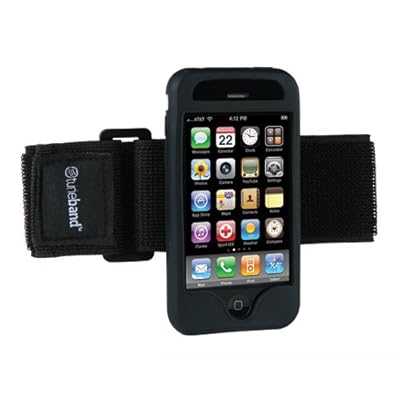
One of the projects I toyed with for a Ubiquitous Computing class three years ago was an application that would work nicely on a PDA that I could somehow strap to my wrist. I wanted to something that would allow me to keep my hands free and support some of my work functions as a school psychologist, such as observing and assessing students, counseling young people, and consulting with teachers and parents. The application would also be useful to my colleagues.
The second part of this application would support teens and young adults with more severe disabilities who participate in a community-based vocational training program. The application would provide a means of giving the students feedback during on-site work activities as well as in work adjustment simulation activities at school.
I abandoned the idea early on, due to frustrating BlueTooth issues and the lack of a suitable way to secure the PDA to various types of wrists.
It is 2010 and now we have the iPhone, iPad, touch-screen netbook/slates, e-readers, 3GS, consumer-ready RFID, low-cost portable GPS devices, and in some places, ubiquitous free Wi-Fi, low-cost digital cameras, and a range of devices that have the potential to play together in some way. Below are a few examples of how far things have come.
RIDGELINE W200 The water-resistant Ridgeline has many of the features I'd like, such as the touch screen interface, a blacklit keypad, an adjustable strap, and range of I/Os. I kind of liked the wearable scanner and imager feature. The scanner/imager can be rotated. If the imager also included a video camera, it would be a plus, since I use video quite a bit to develop video social stories for some of the students I work with who have autism spectrum disorders.
The Ridgeline W200 is too ugly and clunky for me to consider wearing! I'm sure price of the Ridgeline would be out of the question for public school employees and community mental health workers who work with young people with special needs.
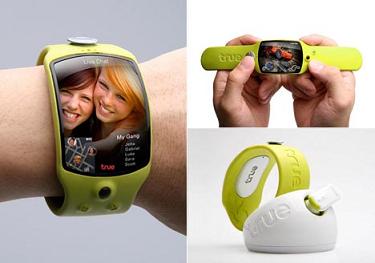
"Everybody had them or at least seen ‘em. Slap bracelets were usually made of thin piece of aluminum wrapped in fabric. Using the same form, Chocolate Agency came up with a mini multimedia device that snaps on with a slap. The entire surface is E-Paper and possesses all its thin, high contrast, power efficient qualities. The length can be adjusted by adding magnetic snaps to the ends. Best part is there’s no recharging needed. It gets all the power it needs via kinetic energy so go ahead, go slap happy." -Yanko Design
The Porcupine This morning I devoted about 45 minutes skimming over the Proceedings for the Fourth International Conference on Tangible, Embedded, and Embodied Interaction, TEI '10, held January 25-27 in Cambridge, MA. A paper related to the Porcupine, a wearable sensing device, caught my eye: Coming to Grips with the Objects We Grasp: Detecting Interactions with Efficient Wrist-Worn Sensors (Eugin Berlin, Jun Liu, Kristof van Laerhoven, Bernt Schield, TEI 2010) From what I can tell, the features of the Porcupine, if embedded in a wearable iPhone-type device, would be extremely useful in a variety of fields, including special education, rehabilitation/habilitation, health care, mental health, vocational training for people with more complex disabilities, and so on.
Below is a TED Talk video of Pranav Mistry, the Ph.D student who invented Sixth Sense, discussing open-source Sixth Sense and related applications:
So now what? After the iPad was unveiled, several people who blog about assistive technology and augmentative communication were curious to see if the new device had the potential for use with people who have disabilities.
It does.
Here are a few links:
iPad for Our Rooms(Kate Ahern, Teaching Learners with Multiple Special Needs)
From what I understand, the iPad will work with Proloquo2Go, an alternative/ augmentative communication program for Apple's iPhone and iPod Touch. Proloquo2Go is priced at a level much lower than other PDA-based systems, and can be purchased at the iTunes App Store. It can be downloaded for use on the iPad once the iPad is available to consumers.
This is great news.
Now someone just needs to get on the convergence train and develop a flexible, mobile device that incorporates the best features of the devices and applications that currently exist!
The following is part of a related post from the TechPsych blog about the Phoenix Mars Mission: If you are an educator with access to an interactive whiteboard and can integrate a visit to Mars into your lesson plans during the last days of the school year, a trip to the Phoenix Mars Mission website is a must! The website is well designed and user-friendly.
I've shared some thoughts regarding collaboration between special education and regular education regarding technology, questions for educators about technology and educational data management systems, a link to a related article from Education Week's Digital Directions, and links to resources, in a recent TechPsych post. Take a look!