Showing posts with label large displays. Show all posts

Apr 22, 2012

Children's Drawings Projected on Buckingham Palace and BBC's Public Big Screens in the UK

Children's self-portraits cover Buckingham Palace (News UK)


Children in the UK were asked to create self-portraits for a special arts project designed to celebrate the Queen's Jubilee. The self-portraits were digitized and transformed to create a media facade that was projected on Buckingham Palace. This example of digital art for public viewing was shared on a number of large screen displays in public spaces around the UK.


This project was part of Face Britain.  All children in the UK were invited to submit a self-portrait in an attempt to create the largest on-line gallery of self-portraits in the world.


Below is a video about the media facade:


Photo credit: Face Britain
FACE BRITIAN video:


from Children & the Arts on Vimeo.


RELATED
Below are some examples of how BBC's large displays are used for interactive games in public spaces:


BBC's Big Screen Games in Public Spaces:

Oct 29, 2011

Interactive Large Displays in Urban Spaces: Communicating Energy Usage through Duke Energy's "Smart Energy Now" Project

On October 28th, the Envision Charlotte project was launched during a celebration at Two Wells Fargo Plaza in uptown Charlotte.  As part of the celebration, interactive displays were turned on as part of an effort to establish Charlotte as the "most sustainable urban core in the country".  Although this is a lofty goal, it is important.

Although I am a little disappointed that I missed the  Envision Charlotte launch party,  I was happy to learn that I how interactive technology will play a role in helping people support the goals of Envision Charlotte and Duke Energy's Smart Energy Now campaign:


According to information from the Smart Energy NowSM blog,  large interactive display kiosks in urban spaces will encourage a large number of people to make simple changes in their daily work lives  by showing the correlation between their actions and energy consumption.  "The kiosks will be in approximately 70 buildings in uptown Charlotte. More than 80,000 employees will be able to visualize real-time energy usage as a single number — a number that could lead to real change in the way Uptown uses energy."  35 buildings were installed with 47-inch displays during the first phase of this endeavor, with more planned for the near future.

 It is possible that this effort might help to decrease energy use within the uptown business section by 20% over the next five years.

Video: Envision Charlotte-Uniting for a Sustainable City


I'll bring my video camera the next time I visit Uptown Charlotte to get a closer view of the interactive displays!


RELATED
 CharlotteScreens_Presentation15_3Dbuildings10.25.jpg
Uptown Workers to be key players in green initiative


The Smart Energy Now program sponsors are Cisco, Verizon, and Duke Energy.
Smart Energy Blog
Envision Charlotte

Feb 21, 2011

Transit: Digital Video Dance Storytelling on Large Displays at the LAX Airport, by Scott Snibbe and Francesca Penzani

Scott Sona Snibbe, an interactive artist, created a large-scale video installation on twenty-nine connected HD displays that curved around at the Tom Bradley International Terminal at the LAX airport in 2010.   The video tells a story of groups of people traveling through an airport who eventually begin dancing in interesting ways.  

Francesca Penzani was the choreographer for this project. Noah Cunningham was responsible for the cinematography, editing, and post-production.


RELATED
SNIBBE INTERACTIVE
The Snibbe Interactive website has lots of great photos and videos of the company's work.


Thanks to Daniel Chen for sharing this video!

Nov 30, 2010

Call for Participation - Large Displays in Urban Life: From Exhibition Halls to Media Facades (CHI 2011 Workshop)

Large Displays in Urban Life: From Exhibition Halls to Media Facades 
CHI 2010 Workshop May 7 or 8, 2011 (final date to be announced)


Call for Participation
Large interactive displays are now common in public urban life. Museums, libraries, public plazas, and architectural facades already take advantage of interactive technologies for visual and interactive information presentation. Researchers and practitioners from such varied disciplines as art, architecture, design, HCI, and media theory have started to explore the potential and impact of large display installations in public urban settings.


This workshop aims to provide a platform for researchers and practitioners from different disciplines such as art, architecture, design, HCI, social sciences, and media theory to exchange insights on current research questions in the area. The workshop will focus on to the following topics: how to design large interactive display installations that promote engaging experiences and go beyond playful interaction, how different interaction models shape people’s experience in urban spaces, and how to evaluate their impact.


Workshop Goals & Topics
The goal of this one-day CHI 2011 workshop is to cross-fertilize insights from different disciplines, to establish a more general understanding of large interactive displays in public urban contexts, and to develop an agenda for future research directions in this area. Rather than focusing on paper presentations, this workshop aims to trigger active and dynamic group discussions around the following topics:


Beyond Playful Interaction
A number of studies found that large display installations invite for playful interaction but often fail to convey meaningful experiences related to content. This raises the following questions:
  • How can we design installations that endure people’s attention past the initial novelty effect and direct the interest toward the content?
  • What design strategies can be applied to promote an active individual and social exploration and discussion of the presented information?
Character of Interaction
A number of interaction techniques have been explored for large displays in public spaces ranging from interaction via cell phones, to direct-touch or full body interaction. We would like to discuss:
  • How do different interaction methods shape people’s experience of large display installations in urban spaces?
  • How do interaction methods differ from each other in terms of triggering interaction and engagement with the presented content?
Evaluation
Different quantitative and qualitative methods have been applied to evaluate people’s experience and use of large display installations in public spaces. During the workshop we would like to discuss:
  • How can we evaluate the "success" of large display installations in urban spaces?
  • How can particular aspects of public large display installations such as engagement be evaluated?
  • What kind of evaluation methods are most effective in different progress stages (design phase/installment phase)?
We see this workshop as an opportunity to start thinking about a general framework that can inform the design and evaluation of large interactive displays in different urban contexts. With a diverse research community present at the workshop we hope to come up with an agenda for future research directions in this area.

For more details on the workshop please refer to our extended abstract and workshop proposal.

Submission Details
Submit a position paper (maximum 4 pages) to largedisplaysinurbanlife@gmail.com by January 14, 2011 using the CHI extended abstract format. The paper should describe experiences, works in progress, or theories around designing and/or evaluating large interactive displays in public urban settings. We plan to explore approaches and insights from different disciplines to this topic so submissions from art, architecture, design, HCI, media theory, and social science are highly encouraged. We welcome all methodological approaches and techniques centered around the topic of large interactive displays in urban life.


At least one author of each accepted position paper needs to register for the workshop and for one or more days of the CHI conference itself.


Important Dates
Submission Deadline: January 14, 2011
Notification of acceptance: February 11, 2011
Workshop: May 7 or 8, 2011 (final date to be announced)

WORKSHOP ORGANIZERS
Uta Hinrichs is a PhD candidate in computational media design at the Innovations in Visualization (InnoVis) research group of the University of Calgary, Canada, under the supervision of Sheelagh Carpendale. Her research focuses on the design and study of large display interfaces to support lightweight information exploration in walk-up-and-use scenarios
Nina Valkanova is doing her PhD at the interaction group of the Universitat Pompeu Fabra (UPF) in Barcelona, Spain under the supervision of Ernesto Arroyo. Her research interest focuses on the design of urban media facades exploring the intersections between scientific and artistic design knowledge.
Kai Kuikkaniemi is a project manager in Helsinki Institute for Information Technology. He is currently leading a national research project focusing on public displays. His earlier research has focused on exploring novel multiplayer game designs ranging from pervasive gaming to biosignal adaptive gaming.
Giulio Jacucci is a professor at the University of Helsinki at the Dept. of Computer Science and director of the Network Society Programme at the Helsinki Institute for Information Technology. He leads several interactional projects on interaction design and ubiquitous computing, and is co-founder of MultiTouch Ltd. a company commercializing products for multi-touch screens.
Sheelagh Carpendale is a Professor at the University of Calgary where she holds a Canada Research Chair: Information Visualization and an NSERC/iCORE/SMART Industrial Research Chair: Interactive Technologies. She directs the Innovations in Visualization (InnoVis) research group and her research focuses on information visualization, collaborative visualization, and large interactive displays.
Ernesto Arroyo holds an associate teaching position at the Dept. of Information and Communication Technologies of the Universitat Pompeu Fabra  (UPF) in Barcelona, Spain. He earned his PhD at MIT Media Lab in 2007. His research at the Interactive Technologies Group  focuses on interaction design, visualization, and user-centered interfaces, enabling and preserving the fluency of user engagement.

Thanks to Uta Hinrich for sending this my way!

Oct 18, 2010

Words of Wisdom (and more) from Harry Brignull: UX Roots in Psychology, Design, Info Architecture...and so much more!

Harry Brignull is a User Experience Consultant at Madget in Brighton, England. According to his "about" page info, his work involves "building experiences by blending User Research, Interaction Design, and process consultancy."  Harry's 90 Percent of Everything blog is a well-spring of information and inspiration.


Back Story
I came across Harry's work in 2004 or 2005, when I was taking a VR Class (Virtual Reality for Education and Training) and working on an assignment about large-screen displays.   At the time, Harry was a Ph.D. working in the Interact Lab at the University of Sussex on the Dynamo project, in collaboration with researchers from the Mixed Reality Lab at the University of Nottingham.

I revisited this work again in early 2007 when I was studying HCI and Ubiquitous Computing, and researching information about collaborative interaction on large displays in public spaces.  The following research article inspired me at the time, and looking back, I consider the work of this team to be seminal, and worth revisiting once again.

Izadi, S., Brignull, H., Rodden, T., Rogers, Y., Underwood, M. (UIST'03)
Dynamo: A public interactive surface supporting the cooperative sharing and exchange of media (pdf)  


(The picture was taken from the Dynamo project's website, and shared on my 2007 blog post, Revisiting promising projects, Dynamo, an application for sharing information on large interactive displays in public spaces.)


Links to a few of Harry's useful blog posts:

UX as Applied Psychology:
Clear Reporting & Critical Thinking:  Why User Experience Needs to Remember its Roots in Psychology (10/4/10)

"There was a time, back in the early 1990s, when almost everyone involved with UX research had a background in Psychology.  Back in those days, the term "User Experience" didn't really exist, and the nearest discipline was Human-Computer Interaction (HCI)..."

Comment:
As a school psychologist, I'm well-steeped in the process of research, observation, and data collection.  I also know that the fundamentals of applied psychology are a very important ingredient in UX work.  Don Norman, one of the "grandfathers" of UX/HCI, was a cognitive psychologist.  He was the co-author of one of my psychology textbooks when I was a university student the first time around. Coincidentally, Norman's book, Design of Everyday Things was required reading for my HCI graduate class.


Mobile Usability Testing for Low Budgets
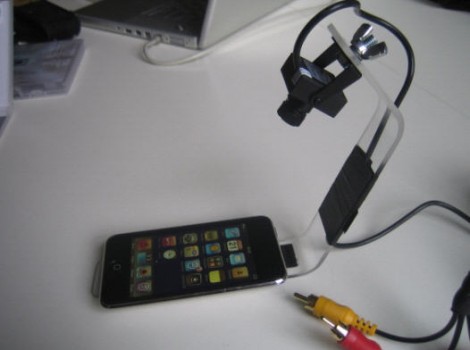
Mobile Usability Testing Tip: Recording from Two Webcams
In this post, Harry discusses quick and cheap methods of using two webcams for mobile usability testing. This method could be used in other situations, such as developing presentations. (It might also be applicable for use in therapeutic and special education settings.)

Image: Nick Bowmast


UX Brighton Presentation on Dark Patterns: User Interfaces Designed to Trick People
My Presentation on Out of Box Experience Design  (Harry Brignall)
David Ogilvy: We Sell or Else


RELATED
Links to Harry's Blog Posts, By Topic


SOMEWHAT RELATED