This video produced by IBM is an overview of the Internet of Things, and depicts how a vast amount of data is generated every day through sensors and monitors that are embedded in everything around us. The concept of "systems of systems" is depicted in a cute graphical manner.
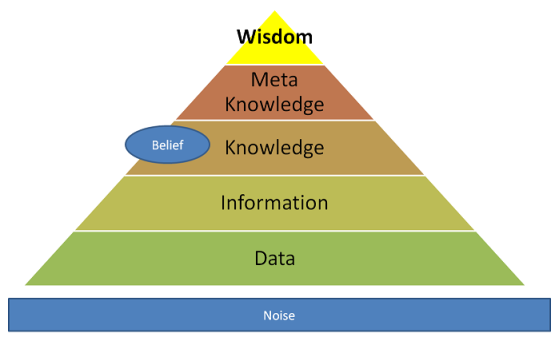
In the video, a pyramid similar to the one below is discussed, outlining the data-to-wisdom process:
Knowledge discovery to wisdom, based on Giarratano and Riley, 1998, found on Ranjeet Walunj's blog.
Questions: What are mere mortals to make of all of this data flowing around? How should educators respond to the reality of the Internet of Things and the wealth of data that will soon be available?
FYI: Previous posts related to the Internet of Things
Lately I've been thinking deeply about ways new multi-touch technologies, running on screens and surfaces of all sizes, can support learning and collaboration, in and outside of the classroom. Microsoft's Courier and Apple's iPad are two tools I'd love to test out in the digital mix in the schools. Here's the latest information about the Courier, via Engadget:
The applications running on this demo look useful!
Apparently the Microsoft Courier, a dual screen 7-inch notebook, accepts multi-touch and stylus input:
-via Deeper2K's YouTube channel
According to Engadget, the Courier is "built on Tegra 2 and runs on the same OS as the Zune HD, Pink, and Windows Mobile 7 Series...We're also hearing that there will be a built-in camera, and there's a headphone jack for media playback. Most interestingly, it looks like the Courier will also serve as Microsoft's e-book device...."
By the way, you can pre-order your shiny new iPad from the Apple Store right now!
-Apple Store
For the Techies and the Tech-Curious:
The iPhone SDK 3.2 beta includes what you'll need for developing applications for the iPad. You can go to the iPad webpage and dowload the SDK, which includes an iPad Simulator, programming guide, sample code, human interface guide, and more. But first, you must be a member of the iPhone Developer Program. The fee is $99.00 a year.
I will share my thoughts about these devices and their use for learning/education in future posts.
We're planning an application for a multi-touch SMART Table at one of my schools, and one of the goals is to ensure that it can facilitate social interaction among students with and without disabilties, including autism. Keeping this in mind, one of my colleages sent me an email a minute ago with a link to a great post by Michelle Winner's blog about social thinking and "inclusion" vs "integration" in education settings. It is worth a read!
The NETP is consistent with the Framework for 21st Century Learning model, calling for schools to ensure students are prepared for the skills they will need in an increasingly complex, technological society:
"The model of 21st century learning described in this plan calls for engaging and empowering learning experiences for all learners. The model asks that we focus what and how we teach to match what people need to know, how they learn, where and when they will learn, and who needs to learn. It brings state-of-the art technology into learning to enable, motivate, and inspire all students, regardless of background, languages, or disabilities, to achieve. It leverages the power of technology to provide personalized learning instead of a one-size fits-all curriculum, pace of teaching, and instructional practices."
Secretary Duncan announcing the Education Technology Plan on YouTube
Hopefully the NETP initiative will encourage teachers to consider video clips for their students to explore that are more exciting than this well-meaning gentleman's talking head!
Teachers who are still struggling with figuring out how to access e-mail attachments and the basics of Microsoft Office 2003, this plan will call for a steep learning curve! I will be by your side to help. It is good to know that David Rose, of CAST, the father of Universal Design for Learning, was one of the members of the NETP working group.
RELATED
National Educational Technology Plan Technical Working Group: