Showing posts with label web of things. Show all posts

Nov 26, 2011

TWINE video and the Supermechanical Blog: Moving Toward the Web of People and Things!

"A wireless square with sensors and a simple web app to set rules, Twine tells you what your things are doing by email, text or Twitter."   I want one!

This project was developed by David Carr and John Kestener, the designer-engineers behind Supermechanical. They are passionate about creating connectable objects.They honed their skills in the interdisciplinary  MIT Media Lab.  


More information about Twine can be found on the KICKSTARTER website.  Here is a bite of info from the site for the tech-curious:

"Twine is a wireless module tightly integrated with a cloud-based service. The module has WiFi, on-board temperature and vibration sensors, and an expansion connector for other sensors. Power is supplied by the on-board mini USB or two AAA batteries (and Twine will email you when you need to change the batteries)."
"The Spool web app makes it simple to set up and monitor your Twines from a browser anywhere. You set rules to trigger messages — no programming needed. The rules are put together with a palette of available conditions and actions, and read like English: WHEN moisture sensor gets wet THEN tweet "The basement is flooding!" We'll get you started with a bunch of rule sets, and you can share rules you create with other Twine owners."
"Because the hardware and software are made for each other, setup is easy. There's nothing to install — just point Twine to your WiFi network. Sensors are immediately recognized by the web app when you plug them in, and it reflects what the sensors see in real time, which makes understanding and testing your rules easy."

RELATED

Nov 11, 2011

Revisiting Good Blogs - Web of Things: "Architecting the Web of Things for Tinkerers and Hackers"


One of my interests is pervasive computing, which casts a very wide "web".  That's why I like the Web of Things blog.  Below is an excerpt from the "About" section of the blog:

"Why do you want to change the Internet? What’s wrong with it? 
Not much really. It’s just a little boring. It only contains data published by other humans, but it’s not enough linked with our physical reality, not real time / real world enough for our taste! 


Why should I read this blog? 
Well depends how much you care about technology. It’s both for geeks/hackers who need a playground to develop and try ideas. But it’s also for the security expert who wants to take part to make the Web a safer place to hang out. It’s also for people who want to find new ideas." 


More about the Web of Things: 
"The Web of Things is a community of developers, researchers, and designers that explore the future of the physical Web. We explore how to leverage Web standards to interconnect all types of embedded devices (sensors, mobile phones, etc.) in order to make them easier to use and to integrate in classic Web applications. We aim to build a future Web of devices that is truly open, flexible, and scalable, and we believe Web standards are the best way to do it." 


The Web of Things blog was founded by Dominique Guinard and Vlad Trifa, two "researchers/geeks" working at ETH Zurich and SAP Research Zurich.

Jun 17, 2011

An Internet of Old Things as an Augmented Memory System: "Tales of Things" allows people to record multimedia stories about objects, linked via QR or RIFD tags.

The following article about "Tales of Things", an interesting augmented memory app, was recently selected for review by Personal and Ubiquitous Computing:

An Internet of Old Things as an Augmented Memory System
Ralph Barthel, Kerstin Leder, Andrew Hudson-Smith, Angelina Karpovich, Martin de Jode, Chris Speed, University College London /  Loughborough University
After watching the following videos and exploring the Tales of Things website, I am sure that this sort of technology will have many uses in education.  Wouldn't it be fun to have a "tales of things" project for a homework assignment?!

In the following video, Chris Speed discusses the Tales of Things project:


Tales of Things Beta: Connecting anything with any media, anywhere!


Below is a video of how an old Fisher Price teaching clock can become part of a "tale of things":


RELATED
Tales of Things: The Internet of "Old" Things:  Collecting Stories of Objects, Places, and Spaces (pdf)  Ralph Barthel, Andrew Hudson-Smith, Martin de Jode, Benjamin Blundell, CASA Centre For Advanced Spatial Analysis, University College London, London, United Kingdom


Mar 31, 2011

CALL FOR PAPERS: Touch the Web 2011 2nd International Workshop on Web-Enabled Objects


CALL FOR PAPERS: Touch the Web 2011
2nd International Workshop on Web-Enabled Objects
The workshop will be held on June 20-24, 2011 in Paphos, Cyprus, in conjunction with the:
The vision of the Internet of Things builds upon the use of embedded systems to control devices, tools and appliances. With the addition of novel communications capabilities and identification means such as RFID, systems can now gather information from other sensors, devices and computers on the network, or enable user-oriented customization and operations through short-range communication. When the information gathered by different sensors is shared by means of open Web standards, new services can be defined on top of physical elements. In addition, the new generation of mobile phones enables a true mobile Internet experience. These phones are today’s ubiquitous information access tool, and the physical token of our "Digital Me“. These meshes of things and “Digital Me” will become the basis upon which future smart living, working and production places will be created, delivering services directly where they are needed.

The fundamental questions in this workshop are:
How do we apply the lessons learned in Web Engineering to the Internet of Things?
What kind of Web-based interaction patterns for embedded devices (streaming, eventing, etc.) can we identify?
Applications, deployments, prototypes and evaluations of Web of things systems.
Human-things interaction models and paradigms (mobile interfaces, etc.)
User-oriented, context-aware discovery and dynamic search for the real world.
Compositions of Things and Meshes of Things.
What kind of interfaces, business models and scenarios these smart things will create, address and modify?
How can the services in the surroundings be composed and orchestrated?

The research areas involved are many, including Web Engineering, Ubiquitous Computing, Product Engineering, Distributed Systems, Human Computer Interaction, Economics, Artificial Intelligence, and many more. We look forward in this workshop to bring together different areas of expertise to help us shape a vision of creating living and working surrounded by meshes of web-enabled things.

Workshop format
Expected number of participants is no more than 20, for a full-day workshop. A tentative program (to be adjusted following the number of participants) is organized as follows:
A short (15 min) opening session by the workshop organizers
Two full paper presentation sessions (each session with 3 papers, 20 min presentation each)
Lunch break
One short paper presentation session (up to 6 papers, 5 min presentation each)
Discussion session. A specific agenda to discuss and provide feedback upon will be proposed and the organizers will moderate the discussion.
The last session will be devoted to consolidate and present the results of the discussions. The workshop organizers will write a workshop summary and publish it as part of the workshop proceedings.

Links - Web of Things: Touch the Web 2011; Web Patterns and the EPC Cloud, Windows 8 Rumors, Human Centered Service Design

WEB OF THINGS
Touch the Web 2011
Dominique Guinard|Web of Things|3/21/11


EPC Cloud: Reducing Software Complexity Thanks to Web Patterns
Dominique Guinard|Web of Things|3/8/11


View more presentations from Dominique Guinard.


WINDOWS 8 RUMORS
Mary Jo Foley |All About Microsoft|ZDNET|3/30/11

HUMAN CENTERED SERVICE DESIGN


FYI:  My dog woke me up very early this morning - so I decided to post a few interesting links. I'll share more in-depth posts in the future when I have a bit more time : )


Feb 18, 2011

About the Web of Things - Great Presentations & Links


"The Web of Things is a community of developers, researchers, and designers that explore the future of the physical Web. We explore how to leverage Web standards to interconnect all types of embedded devices (sensors, mobile phones, etc), in order to make them easier to use and to integrate in classic Web applications. We aim to build a future Web of devices that is truly open, flexible, and scalable, and we believe Web standards are the best way to do it."


WEB OF THINGS PRESENTATIONS
Web of Things - Towards Open and Sharable Networks of Embedded Devices

View more presentations from vladounet.
Design of a Web-based Distributed Location-aware Infrastructure for Mobile Devices

View more presentations from vladounet
Web of Things Upcoming Event
What: 2nd International Workshop on the Web of Things (WoT 2011)
Where: Pervasive 2011 conference, San Francisco, USA
When: June 12, 2011
For who: Hackers, developers, web, and ubicomp/pervasive researchers.

Web of Things Projects


Jan 15, 2011

Saturday Quick Links: Digital Signage and Digital Out of Home (DOOH), via The Digital Signage Insider, Digital Signage Today, and more

The links:

Walmart and Microsoft Talk Up Digital Signage at the NRF
Bill Gerba, The Digital Signage Insider, 1/14/11
Wirespring


NRF: Walmart unveils ROI data for in-store digital signage campaigns
James Bickers, Digital Signage Today, 1/10/11


"C-Tailing" (Converged Retailing)  - NCR
NRF: Convergent technologies on the retail horizon
Cherrhy Butler, Digital Signage Today, 1/11/11

RELATED
Connecting Your Business to Devices and Customers with Windows Embedded

View more presentations from Microsoft Windows Embedded.
Barb Edson, Sr. Director of Marketing, Windows Embedded


Here are a few resources related to this topic:


(LocaModa blog)

LocaModa's whitepapers
Blogs:

COMMENT
Designers and developers need to think about off-the-desktop technologies as a new form of the web/internet.  Information architects who understand interactive media/transmedia, cross-display/device, cross-platform, and interaction design within a broader context are sorely needed in this space.  


The presentation below, by Chris Thorne, Lead Information Architect and User Experience Consultant working for the BBC, provides a good overview about this topic:
Over the past months I've been gathering video and photos of my encounters and interactions with digital signage as a consumer/customer/user during my every-day activities such as shopping, traveling, vacationing, and so forth, which will be included in a post or series of posts in the near future.   


I have content related to interaction with various QR tags,  interactive kiosks, interactive displays and TV on a cruise ship, an interactive touch screen at J.C. Penny, and more.  If you are a regular reader of this blog, you know that my interests include user experience of DOOH, interactive displays in public spaces, and so forth.  


Note:  Despite all of the technological innovations in this converging field, issues related to context, usability, and accessibility are not consistently addressed from a broader systems point of view.

Mar 19, 2010

Data-Information-Knowledge-Wisdom: IBM's video about the Internet of Things & the Smarter Planet

This video produced by IBM is an overview of the Internet of Things, and depicts how a vast  amount of data is generated every day through sensors and monitors that are embedded in everything around us. The concept of "systems of systems" is depicted in a cute graphical manner. 


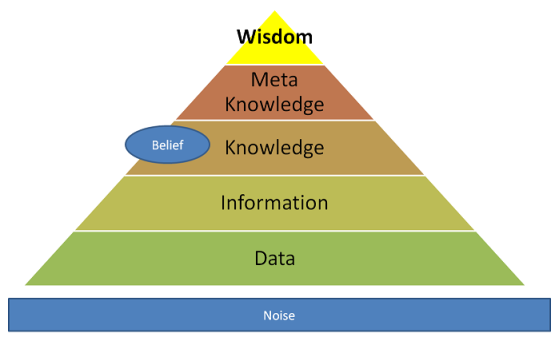
In the video, a pyramid similar to the one below is discussed, outlining the data-to-wisdom process:
http://ranjeetwalunj.files.wordpress.com/2008/10/wisdom.png?w=559&h=342

Knowledge discovery to wisdom, based on Giarratano and Riley, 1998, found on Ranjeet Walunj's blog.

Questions: What are mere mortals to make of all of this data flowing around? How should educators respond to the reality of the Internet of Things and the wealth of data that will soon be available?

FYI: Previous posts related to the Internet of Things

The Internet of Things Europe 2009 Conference: Internet Rabbits, Mirrors, Stamps, and More!
The IBM Web, or Internet of Things
The UX of SmartGridCity: Control Your SmartHouse Remotely, Online
"Web Meets World": User Experience of Embedded Systems and Wireless Sensor Networks
Will NoSQL Rescue the World of Data in the Cloud? (Info and Links for the Tech Curious)
Interactive Mobile Multimedia
Tangible User Interfaces, Part I: Siftables

May 4, 2009

Interacting with the Internet of Things: Pachube

I have a growing interest in the emerging "web of things", and figuring out how computers and gadgets can inter-operate more smoothly. This summer, I'm planning on playing with my RFID toys and learning more about wireless sensor networks. I can't wait until waiting for my MIR:ROR and Nabaztag arrive. I'm also looking forward to exploring the Pachube concept.

So what is Pachube?

Pachube: "A web service that enables people to tag and share real time sensor data from objects, devices and spaces around the world, facilitating interaction between remote environments, both physical and virtual."


You can sign up for
Pachube on the web, and learn more about it by exploring the following links:


Pachube, Patching the Planet: Interview with Usman Haque
Ways to User Pachube
Pachube Website
Pachube Tutorials
Extended Environments Markup Language
EEML library for Processing


http://apps.pachube.com/google_gadget/pachube_gadget.png
Pachube iGoogle Gadget: Create a monitoring dashboard

Usman Haque is
an architect and director of Haque Design + Research.

"The domain of architecture has been transformed by developments in interaction research, wearable computing, mobile connectivity, people-centered design, contextual awareness, RFID systems and ubiquitous computing. These technologies alter our understanding of space and change the way we relate to each other. We no longer think of architecture as static and immutable; instead we see it as dynamic, responsive and conversant. Our projects explore some of this territory."

(cross post on the TSHWI blog)

May 2, 2009

Internet of Things Europe 2009 Conference - Internet Rabbits, Mirrors, Stamps, and More!

The Internet of Things Europe 2009 conference, focusing on emerging technologies for the future, will be held on May 7th and 8th in Brussels at the Sofitel Brussels Europe hotel.

Rafi Haladjian, a co-founder of Violet, will be presenting at the conference during the following session on Thursday, May 7th.

Session 2: Innovation and emerging technologies and business models
"This session will explore what emerging innovations, technologies and market trends are being seen now, and which are likely to emerge in the future. What are the research requirements and obstacles in terms of affordability, usability or accessibility that need to be addressed? How will economic, technological and application trends drive the evolution of architectures for the ‘Internet of Things’? What successful business models are already being seen today, and how can these be adapted with future technological developments?"


In a previous post, "The Internet of Things can be Cute: MIR:ROR by Violet", I discussed how RFID is being used in a variety of playful ways to trigger a link to information.The following video from the Violet website explains how MIR:ROR uses little RFID stamps to interact with the Internet and activate things through the MIR:ROR. Each stamp has an e-mail address.


The rabbit in the picture below is called Nabaztag, from Violet, the first Internet-connected Rabbit. He hears, he reads, and he speaks. He can wake you up, give the weather forecast, update you on your friends face-book and twitter status. He can also send music, e-mail messages, and read stories.
http://idleparis.co.uk/wp-content/uploads/2008/12/mirror-300x219.jpghttp://www.violet.net/img/ztamps_banner.gifhttp://www.violet.net/img/mirror.gif

The little rabbits have been around for quite a while. Below is an opera composed by Antoine Schmitt and Jean-Jacques Birge, following an idea by Guylaine Monnier:


90 of the rabbits were brought to the performance by their owners, and ten were supplied by Violet.

You can purchase books from the Violet website for 3 to 7 year old children. These books feature Ztamps, that are recognized by the MIR:ROR and the Nabaztag rabbit, and will read the book to the child.

On a more serious note, here are a few other sessions that I'd be interested in attending at the Internet of Things conference:

Session 5: Privacy, Security & Data Protection
"Although privacy and data protection policy has become increasingly sophisticated since the emergence of the Internet, controversies are likely to accelerate with the new applications likely to be encountered in the Internet of Things. Security issues, particularly surrounding unauthorised access to and unintended disclosure of data are becoming more prevalent. What qualitatively new challenges are presented by the Internet of Things? How can the rights of citizens or businesses in one country be safeguarded on global networks? Whatrights pertain to Things on the Internet of Things?"

Session 6: Service Architecture and Communication
"The range of connectivity options available is bewildering - but the challenges of scalability, interoperability and ensuring return on investment for network operators remain. How will communication needs change as a result of the Internet of Things? What new service architectures will be required to cater for the connectivity demands of emerging devices? How will spectrum rights holders participate in the Internet of Things"

(A similar post is on the Technology Supported Human-World Interaction blog.)

Mar 6, 2009

Interaction with the Web of Things; LIFT '09

I recently came across the Web of Things blog and found it to be a gem. Vlad Trifa and Dominique Guinard are the brains behind the blog. They have lots of interesting ideas that are at the intersection of WSN (Wireless Sensor Networks) and HCI (Human Computer Interaction).

Vlad and Dominique recently presented at LIFT '09. If you haven't heard of Lift, take some time and visit the website:

"LIFT is a series of events to inspire and connect the community of doers and thinkers exploring the social impact of new technologies. Each LIFT conference is a three days experience made of talks, workshops, interactive art and discussions to understand and anticipate the most important social changes, and meet the people behind them."


Everything on the Web of Things blog inspired me to write two posts, back to back, on my Technology Supported Human World Interaction blog:

More cool things from the Web of Things blog


The Web of Things, Wireless Sensor Networks, Embedded Systems, and (Everyware) Health Care
(The above post was inspired by my experience at the Cleveland Clinic, spending time every day with my father, who has been in the cardio ICU since his surgery a few days ago.)