Showing posts with label video games. Show all posts

Dec 28, 2013

The Art of Video Games Exhibition - Coming to a Museum Near You!

The Smithsonian American Art Museum has an impressive collection, and video games are some of the most recent additions.  The study and preservation of video games as an artistic medium is now a part of the museum's Film and Media Arts Initiative.  The Art of Video Games exhibition took place at the museum in 2012, and set off for a tour of museums around the U.S.  (See below.)

The following video trailer provides a brief overview of some of the video games included in the exhibition:


A few quotes from the Art of Video Games trailer:

"Games are so much more than just code that runs inside of a computer.  You are looking at the output of passion, of love, of art, and the people who create these games." - Chris Melissinos, Curator, The Art of Video Games

"One of the things that is really fun with games is the whole idea of the playful mind…and how can we make games surprise you." - Nolan Bushnell, Founder of Atari

"You don't need technology to create feelings, and love, and fear, and hate, and passion…you need great storytelling." -Jen MacLean, Video game developer


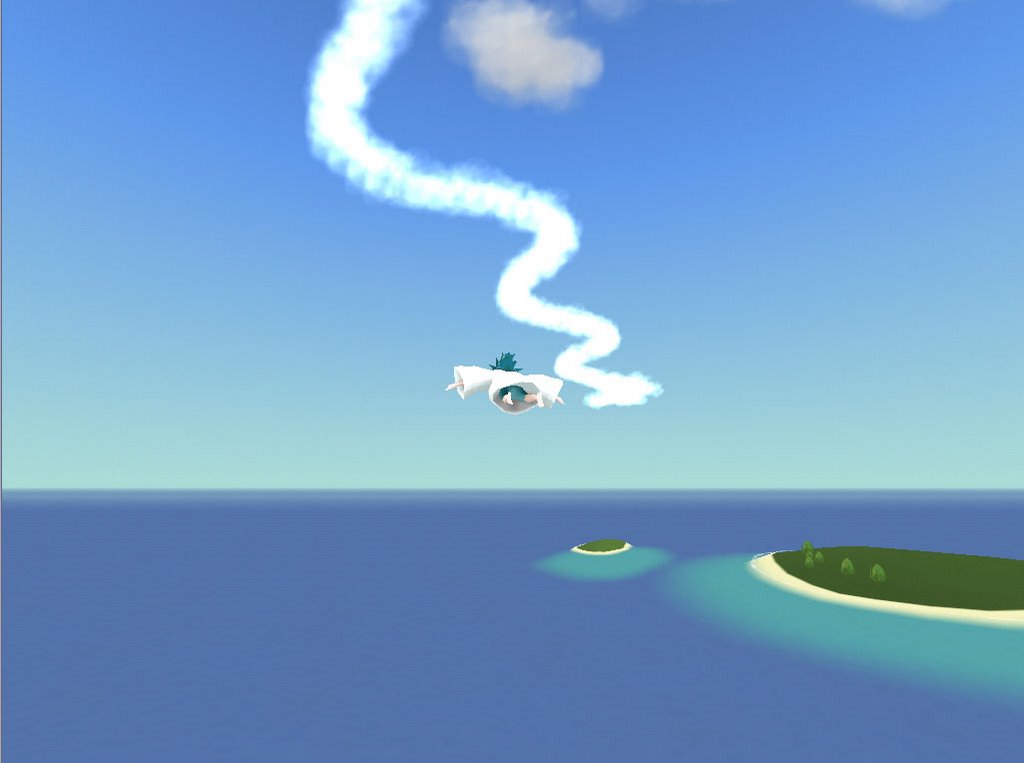
The trailer and photo below are from "Flower", the first video game included in the museum's collection.  Flower was created by Jenova Chen and Kellee Santiago (ThatGameCompany).  It is a delightful, stress-reducing game - and one of my favorites.


Credit: Sony Entertainment/Smithsonian American Art Museum, Via NPR

(I first learned about Jenova Chen's work when he was a student at UCS's School of Cinema and Television. At the time, he wrote his MFA thesis on the topic of "Flow in Games", building on psychologist Mihaly Csikszentmihali's theory of flow.  Part of his MFA work included the game "Cloud", which was available for free download.  I found the game to be very useful in my worked with teens who were considered "at-risk" or who had special needs.)

MoMA and Video Games
The Smithsonian isn't the only place where video games are curated.  The Museum of Modern Art (MoMA) has invested in a number of video games, supported by Paola Antonelli, the MoMA's senior curator of architecture and design.  

"The real core issue of interaction design is behavior.  Designers that deal with interaction design behaviors that go to influence the rest of our lives. They're not just limited to our interaction with the screen…" -Paola Antonelli

The following TED-Talk video explains the rationale behind MoMA's video game curation efforts.  It is worth taking the time to watch!


National Tour: The Art of Video Games 

Present:
Everson Museum of Art in Syracuse, New York 
(October 25, 2013–January 19, 2014) 

Upcoming:
Hudson River Museum in Yonkers, New York 
(February 15, 2014–May 18, 2014) 
Toledo Museum of Art in Toledo, Ohio 
(June 19, 2014–September 28, 2014) 
Flint Institute of Arts in Flint, Michigan 
(October 25, 2014–January 18, 2015) 
Chrysler Museum of Art in Norfolk, Virginia 
(February 13, 2015–May 10, 2015) 
Memphis Brooks Museum of Art in Memphis, Tennessee 
(June 6, 2015–September 13, 2015) 
The Patricia and Phillip Frost Art Museum at Florida International University in Miami, Florida (October 9, 2015–January 25, 2016) 

Past venues:
Boca Raton Museum of Art in Boca Raton, Florida 
(October 24, 2012–January 13, 2013) 
EMP Museum in Seattle, Washington 
(February 16, 2013–May 13, 2013) 
Phoenix Art Museum in Phoenix, Arizona 
(June 16, 2013—September 29, 2013) 

Here is a description of the original Art of Video Games exhibition:

"The Art of Video Games is one of the first exhibitions to explore the forty-year evolution of video games as an artistic medium, with a focus on striking visual effects and the creative use of new technologies. It features some of the most influential artists and designers during five eras of game technology, from early pioneers to contemporary designers. The exhibition focuses on the interplay of graphics, technology and storytelling through some of the best games for twenty gaming systems ranging from the Atari VCS to the PlayStation 3. Eighty games, selected with the help of the public, demonstrate the evolution of the medium. The games are presented through still images and video footage. In addition, the galleries will include video interviews with twenty developers and artists, large prints of in-game screen shots, and historic game consoles. Chris Melissinos, founder of Past Pixels and collector of video games and gaming systems, is the curator of the exhibition..." -Smithsonian American Art Museum

RELATED
Video Games: Now A Part of American ARt's Collection
Eye Level, Smithsonian American Art Museum, 12/17/13
April Fehling, NPR All Tech Considered, 12/22/13
The Art of Video Games (Exhibit website, Smithsonian American Art Museum)
Book: The Art of Video Games: From Pac-Man to Mass Effect (Chris Melissinos, Patrick O'Rourke
The art of Video Games Book Cover


Film and Media Arts Initiative, Smithsonian American Art Museum
Games to lift stress away:  Flower, flOw, (and Cloud), from thatgamecompany
Lynn Marentette, Interactive Multimedia Technology Blog, 8/15/09
That Game Company  "Our Mission:  Create timeless interactive entertainment that makes positive change to the human psyche world wide."   Hiring!
Video Games: 14 in the Collection, for Starters
Paola Antonelli, Inside/Out, MoMA PS1Blog
Video Games: Seven More Building Blocks in MoMA's Collection
Paul Galloway, Inside/Out PS1Blog, 6/28/13
'All Hell Broke Loose': Why MoMA Is Exhibiting Tetris and Pac-Man




Oct 22, 2011

Make and Share Your Games Online! Update: Game Creator and the Cartoon Network Website


I came a cross the Cartoon Network's Game Creator website a couple of years ago and thought I'd take a look at how it has grown since my last peek.  If you are a kid, educator, or parent, take a look at the updated links below. 


As I mentioned in a previous post, some educators might frown upon games and cartoon-related content.  The combination of games + cartoons might not be so bad, especially when the activity is something that can be shared in a social context.  By participating in the creation of digital games, young people are provided with skills that might just entice them to consider learning more about STEM-related fields.  (STEM = Science, Technology, Engineering, and Math)


About Game Creator
According to the website, the Cartoon Network's Game Creator is "an application that gives you the power to create your own action games and share them with the world. It leads you through a simple, six-step process and gives you a set of easy-to-use tools to customize your game however you wish. When you finish building a game, you can send it to Cartoon Network's game gallery for other fans to play and rate. The gallery makes it easy for you to play other people's games, rate them, sort them and even share them with your friends."


Ben 10 Game Creator
Parent Information   (Ben 10 Game Creator Website)
Clone Wars Game Creator
Parent Information (Clone Wars Game Creator)
Batman Game Creator
Parent Information (Batman Game Creator)
Game Creator Central

RELATED
Lynn Marentette, Interactive Multimedia Technology, 4/25/10
Lynn Marentette, Interactive Multimedia Technology, 7/13/09

SOMEWHAT RELATED
MIXIT Video Creator  (Cartoon Network)
10 Truths About Books and What They Have to Do With Video Games
James Paul Gee, 5/15/11
"There are 10 key truths we know about books. They happen to be equally true of other "meaning making technologies" like television and video games. Thus, in these 10 ways, books and video games are the same." -James Paul Gee

Aug 3, 2010

Settlers of Catan Game by Vectorform Game Studio, on a Microsoft Surface

Vectorform worked with Catan to develop the digital version of the Settlers of Catan for Microsoft's Surface:

The game supports a range of gestures and interactions that are similar to the real game, but without the need to keep up with all of the parts and pieces!


RELATED
A New Frontier for the Settlers of Catan
Vectorform to Launch "The Settlers of Catan" for Microsoft Surface"
Lindsay Ruthven, Vectorform Blog 8/2/10
"Features:
• Full multi-touch from the Microsoft Surface allows all players to interact with their elements of the board at once.
• A digital playing surface breathes new life into the Catan experience through graphics and animations.
• “State-free-trade” allow players to swap cards without entering modes or pressing buttons, keeping the experience as pure as possible.
• Customized art unifies the multi-touch interface with Mayfair’s 4th Edition release of The Settlers of Catan to create a seamless play experience.
• Integration with real-world objects to maintain the original Catan board game feel."

Settlers of Catan

Apr 18, 2010

Games for Health Conference, Games Accessibility Day, and Games Beyond Entertainment Week! (Via Ben Sawyer, Digital Mill, Serious Games Initiative)


The Games for Health Conference and Games Beyond Entertainment Week are coming soon.

We can now reveal our excellent keynotes for the 2010 Games for Health Conference:

Day 1: Wednesday May 26
THE MIND-BODY EXPERIENCE OF SONY MOVE: Relationships between Gaming, Play, Exercise, and More!
Dr. Richard Marks
Senior Researcher Sony US R&D group

Dr. Marks also known as the "father of the EyeToy" will discuss the relationship between gaming, play and exercise, referencing his work in the development of Sony’s new motion controller system, PlayStation Move, as well as his previous work with Sony’s EyeToy, PlayStation Eye and other interfaces.

Day 2: Thursday May 27
THE HUMAN PLAY MACHINE
Chaim Gingold
Chaim Gingold, a longtime independent game developer and original designer of Spore’s creature creator will discuss how existing game genres map onto the human brain and body and how design decisions affect who will be attracted to the game and how they will play.

You can see the nearly full schedule at: http://www.gamesforhealth.org/schedule.htm

Two of our May 25: Pre-Conference Events also have schedules posted:

Out & About: The Mobile Serious Games schedule: http://bit.ly/9MbEEF

3rd Annual Games Accessibility Day: http://gamesaccessibilityday.org/schedule.html (See below)


Best,
Ben Sawyer
Digitalmill
Serious Games Initiative

Games for Health Project
@bensawyer on twitter

Here is the schedule of the Games Accessibility Day,  May 25, 2010:

Tuesday, May 25, 2010


8:30 am to 9:00 am

Coffee

9:00 am to 9:50 am

Opening Ceremonies
Introduction of the Day, Mark Barlet 
Keynote Address:
Chuck Bergen – Making a commercial game targeting at the disabled community, and how he sold the idea to the biggest game company on the planet.

9:50 am to 10:00 am

Break

10:00 am to 10:30 am

Presentation: Tobi Saulnier - Winter's Tale : A Case Study of Designing for Game Accessibility on the Nintendo DS

10:30 am to 10:45 am

Presentation: Katherine Mancuso - Best Practices for Accessible Communication Using a Virtual World

10:45 am to 11:00 am

Presentation: Tim Holt: Game Accessibility in Special Education.

11:00 am to 11:15 am

Break

11:15 am to 11:30 am

Introduction to the “Hacker Hardware Challenge”
  • Adam Coe
  • Ben Heckendorn
  • Suzanne Robitaille

11:30 am to 12:00 pm

Presentation: Halimat Alabi - Making the Fantasy Real: Giving Good User Interface

12:00 pm to 12:20 pm

Presentation: Mantha Sadural - SPREAD: Appreciating Speech through Gaming

12:20 pm to 1:30 pm

Lunch

1:30 pm to 1:50 pm

“Hacker Hardware Challenge” the reveal and Q&A

1:50 pm to 2:10 pm

Presentation: Johnny Richardson - The Social Construction Model of Interactive Gaming for Disabled Users: Benefits and Developmental Evaluation

2:10 pm to 2:30 pm

Presentation: Eleanor Robinson - Game Accessibility and the Aging Community

2:30 pm to 3:00 pm

Group Activity: Break out into groups and solve the world’s problems
How could we pass up the opportunity to flex the massive amount of talent assembled in one room. Take on a challenge and help develop a solution.

3:00 pm to 3:10 pm

Break

3:10pm to 3:40 pm

Group Activity: Presentation of the breakouts

3:40 pm to 4:10 pm

Presentation: Rock Vibe - Rock Band for People with No or Limited Vision

4:10 pm to 4:30 pm

Break

4:30 pm to 5:00 pm

Presentation: Suzanne Robitaille and Mark Barlet - Reviews for All, A New way of looking at things for our community

5:00 pm to 5:20 pm

Presentation: Heidi Silver-Pacuilla - Unleashing the Power of Innovation for Assistive Technology

5:20 pm to 5:30 pm

Closing Ceremonies


Jan 18, 2010

Special Effect's on-line Accessible Gamebase network, supporting accessible games for young people with disabilities.

"SpecialEffect is a charity dedicated to helping ALL young people with disabilities to enjoy computer games. For these children, the majority of computer games are simply too quick or too difficult to play, and we can help them and their parents to find out which games they CAN play, and how to adapt those games that they can't."


Here is a video that tells a story of how SpecialEffects created a game for a young woman, Helen, with a motor disability.  Helen operates the computer with her eyes to play against her brother, who uses the touch-screen interface:

If you are interested in supporting accessible games, consider joining Accessible Gamebase, a new on-line community maintained by Special Effect.  Below is the message I recently received from SpecialEffect regarding this opportunity to connect others regarding accessible games:


"Have you been wondering just what it is you could do to get involved with SpecialEffect? Well, that question is answered today with the launch of SpecialEffect's 'accessible Gamebase.


  • It deals with all access devices for all physical and learning disabilities - from switch users to eye controllers. 
  • It's not just a place for gamers but a place where everyone - carers, gamers, developers and, of course, end-users themselves - can both share information and try out the latest games whether they are seasoned gamers or absolute beginners. 
  • It has the potential to be a great training tool, too, and we've already put up some example videos to illustrate how the games are played. 
  • As it's based on a social networking model, anyone can easily join up and share information. 
  • It tells you not only how to adapt mainstream games for use by everyone but also provides information on which special games are available - and for whom.
All in all, then, it's very much designed to be a place that encourages anyone with an interest in this area to meet to share information and ideas. The proof of the pudding will be in the extent to which people use it, of course, and it will need significant promotion (yes, this will be where we will need your help!) to reach that point of critical mass when, with SpecialEffect's expert input and moderation, it will thrive.

Go to
http://www.gamebase.info to sign up and Be a Part of It!"


Aug 15, 2009

Games to lift stress away: Flower, flOw, (and Cloud), from thatgamecompany

As I set out to revisit some of my early posts on this blog, I came across a link to a review the Flower game, created for the Playstation 3 by Jenova Chen, Kellee Santiago, and other members of thatgamecompany. It is good to know that this group continues to work towards the goal of creating innovative games that provide gaming experiences that are calming, pleasant to use, and are unlike most game genres.


http://iamshallow.files.wordpress.com/2009/05/flower-20070920032053752.jpg
Flower 
(Credit: IGN)

"Supported HD Output: 720p, 1080i, 1080p- From the same developers that brought you the serene flOw comes Flower, whose gameplay has players guiding a flower petal across gorgeously rendered fields and plains, replete with individually modeled leaves of grass that blow and sway in the wind. Colorful, peaceful, and exhillerating, Flower is a difficult game to describe, and simply must be experienced in all it’s HD beauty to truly be appreciated. A real gem."

(Flower is played with the Sixaxis wireless game controller that can sense motions and provide precision in interactive game play. The Sixaxis was recently replaced by Duoalshock 3, which provides motion sensing and rumble. I'm not sure if the new controller works with Flower.)


The following video review by Pete Dorr won't give enough details about the game to spoil it for you. Go ahead and watch the review!


Since I don't have a PS3 (yet), I'm sharing a couple of reviews of Flower that I found on the IGN website:

"thatgamecompany's mellow, beautiful adventure through the dreams of plants starts out so disarmingly pleasant that one would be forgiven for assuming it's just a game about flying around and picking up flower petals. It's not until one experiences the couple-hour experience from beginning to end (preferably with 5.1 audio, the lights off and no human distractions) that the game really gets its emotional hooks into you. Without ever introducing a single line of dialogue, any characters (at least in the traditional sense) or clear goals, Flower takes you on a ride that's over far too soon, yet somehow seems just right for what it's trying to do: suck you into a world without the usual video game trappings while playing with your emotions in a way no amount of manufactured tear-jerk dialogue or surprise deaths ever could. It really is unlike anything else you'll ever play and stands as one of the best (if not the best) examples of SixAxis motion controls on the PS3."


"thatgamecompany has depicted something that I never once imagined: what would a flower's dream look like if we could see it? Flower, a PS3 downloadable that comes as a spiritual successor to flOw, is one of the most beautiful games that I've ever played. Not just because the visuals are entirely breathtaking, but also because the experience of playing it offers more enjoyment, emotion and enlightenment than any game I've tried in years."

"Before you read on, keep in mind that Flower isn't quite for everyone. There will be those that experiment with it but won't see the point, as it strays so far from the traditional spectrum of gameplay systems, but it's truly worth playing...Flower is a poem, where you as the player participate in the dreams of flowers confined to the ever-changing landscape of a colorless city. Each dream, or stage, revolves around a different theme and gameplay objective, but your method of control remains the same: tilt the controller to direct a series of flower petals through beautiful environments. Press any button to stir up a wind that will coax them along. As you begin with one flower petal, you'll soon touch other flowers and gather more petals, generally influencing the environment in a way that pleases the dreamer. This setup works amazingly well to create varying tasks for you to enjoy..."

Flower was listed as one one of the best games for the Playstation 3 for HDTV, along with a flOw, a 2006 game from the same company:

Best Playstation 3 Games For Showing Off Your New HDTV


http://selectstartgames.files.wordpress.com/2009/05/flow_ps3_hero.jpg

flOw
"Supported HD Output: 720p, 1080i, 1080p- Calm, serene, and beautiful in it’s simplicity, flOw was one of the first PSN titles released when the Playstation 3 launched in November 2006, and it’s still a gorgeous work of art. From the calming music, to the simple gameplay, flOw proves that you don’t need high resolution textures and thousands of animations to produce a beautiful image."

"FlOw is a game about piloting an aquatic organism through a surreal biosphere where players consume other organisms, evolve, and advance their organisms to the abyss."


I came across Cloud about four years ago, when I was looking for non-violent games that could support relaxation and stress-reduction. Cloud was created by some of the members of thatgamecompany when they were students at UCS.

I later posted about how I used the game in in my work as a school psychologist:

Cloud is a relaxing, nonviolent game, created by graduate students at USC. The character, a child, flies around, collecting clouds and putting them into puzzles in the sky. The music is very soothing. The game is free and can be downloaded through the website. This game could be used to help relax students with anxiety disorders, Asperger syndrome, etc., develop coping strategies. Here is the link to the Cloud video trailer.
(I use the Cloud Game as a form of crisis intervention with students undergoing high level of agitation and stress at the middle and high school level.)

Below is a video of the Cloud game, which was designed for use on a computer. It still appears to be available for free from the USC website.


FlOw was Jenova Chen's MFA Thesis, built upon Mihaly Csikszenmihalyi's Flow Theory:

"being completely involved in an activity for its own sake. The ego falls away. Time flies. Every action, movement, and thought follows inevitably from the previous one, like playing jazz. Your whole being is involved, and you're using your skills to the utmost."

The game went on to become an award-winning PS3 game.
The early web-based version of flOw is free, and some of the gameplay can be done using your finger on a touch screen. The music is relaxing, almost hypnotic.


Why this is important:

There is a need for games that can be used for relaxation, as most commercial games focus on action and thrills, often delivered through violence.

(Pictures and videos are from the IGN website, YouTube, and related websites.)

Sep 16, 2008

Videogames, Teens, and.... Civic Education?

Videogames have become a serious target for study by researchers. If youhaven't played a video game in years, you might be surprised at the results of a recent study by the Pew Internet & American Life Project and the Civic Engagement Research Group at Mills College.

Major New Study Shatters Stereotype of Teens and Video Games: Game playing is universal, diverse, often involves social interaction, and can cultivate teen civic engagement
- MacArthur Foundation

From the above article:

"A focus of the survey was the relationship between gaming and civic experiences among teens. The goal was to test concerns that gaming might be prompting teens to withdraw from their communities. It turns out there is clear evidence that gaming is not just an entertaining diversion for many teens; gaming can be tied to civic and political engagement. Indeed, youth have many experiences playing games that mirror aspects of civic and political life, such as thinking about moral and ethical issues and making decisions about city and/or community affairs. Not only do many teens help others or learn about a problem in society during their game playing, they also encounter other social and civic experiences:

  • 52% of gamers report playing games where they think about moral and ethical issues.
  • 43% report playing games where they help make decisions about how a community, city or nation should be run.
  • 40% report playing games where they learn about a social issue. "
"Moreover, the survey indicates that youth who have these kinds of civic gaming experiences are more likely to be civically engaged in the offline world. They are more likely than others are to go online to get information about current events, to try to persuade others how to vote in an election, to say they are committed to civic participation, and to raise money for charity."

Teens, Video Games, and Civics pdf
-Pew Internet & American Life

The Civic Potential of Video Games pdf

I'll post more later!

Sep 1, 2008

Interactive Touch-Screen Technology, Participatory Design,and "Getting It"....

PLEASE SEE THE UPDATED VERSION OF THIS POST:
Interactive Touch Screen Technology, Participatory Design, and "Getting It", Revisited

http://www.ehomeupgrade.com/wordpress/wp-content/uploads/hp_touchsmart_pc.jpghttp://www.wired.com/images/article/full/2008/08/han_interview_630px.jpg

There's been some discussion over the reasons why so many people don't understand touch screen, or "surface" computing, even though research in this area has been going on for years.

As the new owner of the HP TouchSmart, I know that I get it.

The research I've conducted in this area suggests that people will "get-it" only if there is a strong commitment to develop touch-screen "surface" applications through a user-centered, participatory design process. In my view, this should incorporate principles of ethnography, and ensure that usability studies are conducted outside of the lab.


This approach was taken with
Intel's Classmate PC. Intel has about 40 ethnographic researchers, and sent many of them to work with students and teachers in classrooms around the world. (A video regarding ethnographic research and the Intel Classmate project can be found near the end of this post.)

http://download.intel.com/pressroom/kits/events/idffall_2008/images/Picture007.jpghttp://www.classmatepc.com/images/advocateImage.jpg

Where to start?
K-12 classrooms and media centers. Public libraries. Malls. Hospital lobbies and doctor's offices. Any waiting room. Staff lounges in medical centers, schools, and universities. Community festivities and events. Movie theater lobbies. Museums and other points of interests.


I believe we need to take a "touching is believing" approach.

Here are some thoughts:

When I try to explain my fascination with developing touch-screen interactive multimedia applications, (interactive whiteboards, multi-touch displays and tables, and the like), many of my friends and family members eyes glaze over. This is particularly true for people I know who are forty-ish or over.

Even if you are younger, if you never saw the cool technology demonstrated in the movie Minority Report, or if you have limited experience with video games, or if you haven't came within touching distance of an interactive whiteboard, the concept might be difficult to understand.


The reality?

Even people who have the opportunity to use surface computing technology on large screens do not take full advantage of it. Multi-touch screens are often used as single-touch screens, and interactive whiteboards in classrooms are often serve as expensive projector screens for teacher-controlled PowerPoint presentations.


Most importantly, there are few software developers who understand the surface computing approach, even with the popularity of the iPhone and iPod Touch. Most focus on traditional business-oriented or marketing applications, and have difficulty envisioning scenarios in which surface computing would be a welcome breath of fresh air.

Another factor is that not all people entrusted to market surface or touch screen computing fully understand it.

http://blogs.msdn.com/blogfiles/healthblog/WindowsLiveWriter/MicrosoftHUGWishyouwerehereDay2_82D3/IMG_0550_thumb.jpg
Despite a cool website showing off the goods, Microsoft's Surface multi-touch table has been slow to take off, limiting hope of bringing down the price tag to a price most families or schools could afford. (The picture above depicts an application for the Surface designed for health care professionals, not K-12 science education.)

Although you can't buy a Surface table for your family room, it is possible to buy a TouchSmart.

HP's TouchSmart website is engaging and highlights some examples of touch-screen interaction, but most people don't seem to know about it.


Unfortunately, you wouldn't have a clue that the HP TouchSmart exists browsing the aisles at Circuit City or Best Buy!

When I was shopping for my new TouchSmart, I noticed that from a distance, the TouchSmart looked just like the other larger flat-screen monitors filling up the aisles. The salespeople at both stores were not well-informed about the system. The only reason I knew bout the new TouchSmart was related to my obsession with interactive multimedia touch-screen applications- designing them, developing them, studying them, reading about them, blogging about them.... ; }

More thoughts:

After studying HCI (Human-Computer Interaction), and relating this knowledge to what I know as a psychologist, my hunch is that the "Window Icon Mouse Pointing-device" (WIMP) and keyboard input mind-set is embedded in our brains, to a certain extent. Like driving a car, it is something automatic and expected. This is true for users AND developers.

Think about it.

Suppose one day, you were told that you no longer were allowed to control your car by turning on the ignition, steering the wheel, or using your feet to accelerate, slow down, or stop the car! Instead, you needed to learn a new navigation, integration, and control system that involved waving your hands about and perhaps speaking a few commands.

For new drivers who'd never seen a car before, this new system would be user-friendly and intuitive. Perhaps it would be quite easy for 16-year-old kids to wrap their heads around this concept. For most of us, no. Imagine the disasters we would see on our streets and highways!

When we think about how newer technologies are introduced to people, we should keep this in mind.

In my mind, spreading the word about surface computing is not a "if you build it, they will come" phenomenon, like the iPhone. We can't ignore the broader picture.

From my middle-age woman's vantage point, I believe that it is important that the those involved with studying, developing, or marketing surface computing applications realize that many of us simply have no point of reference other than our experiences with ATMs, airline kiosks, supermarket self-serve lanes, and the like.

(The video clip at the very end of this post provides a good example of touch-screen technology gone wrong.)


Be aware that there are substantial numbers of people who might benefit from surface computing who prefer to avoid the ATMs, airline kiosks, and self-serve grocery shopping.

Realize that the collective experience with technology, in many cases, has not been too pretty. Many people have had such user-unfriendly experiences with productivity applications, forced upon them by their employers, that any interest or desire to explore emerging technologies has been zapped.

My own exposure to interactive "surface" related technology was somewhat accidental.

A few years ago, a huge box was deposited into the room I worked in a couple of days a week as a school psychologist at a middle school. After a week or so, I became curious, and found out that it was a SmartBoard. Until then (2002!), I did not know that interactive whiteboards existed.

The boxed remained unopened in the room for the entire school year, but no worry. I played with the only other SmartBoard in the school, and found a couple at the high school where I also worked. I hunted for all of the applications and interactive websites that I could find, and tried them out. That is when I was hooked. I could see all kinds of possibilities for interactive, engaging subject area learning activities. I could see the SmartBoards potential for music and art classes. With my own eyes, I saw how the SmartBoard engaged students with special needs in counseling activities.

(By the way, if you are working with middle school students, PBS Kid's ItsMyLife website activities work great on an interactive whiteboard.)

A few years have passed, and reflecting on all of my fun experiences with interactive whiteboards, with and without students, I now understand that many teachers still have had limited exposure to this technology.

This school year, many teachers are finding themselves teaching in classrooms recently outfitted with interactive whiteboards, scrambling along with educational technology staff development specialists, to figure out how it works best with various groups of students, and what sort of changes need to be made regarding instructional practice.


For the very first time, interactive whiteboards were installed in two classrooms at one of the schools I work at. One of the teachers I know thanked me for telling her about interactive whiteboards and sharing my resources and links.

If I hadn't let her know about this technology, she wouldn't have volunteered to have one installed in her classroom. It has transformed the way she teaches special needs students.

In the few months that she's used the whiteboard, I can see how much it has transformed the way the students learn. They are attentive, more communicative, and engaged. The students don't spend the whole day with the whiteboard - the interactive learning activities are woven into lessons at various times of the day, representing true technology integration.

Now let's see what happens when all-in-one touch-screen PC's are unleashed in our schools!

Some resources:
HP TouchSmart PC website, with demo
HP's TouchSmart YouTube videos
lm3labs (catchyoo, ubiq'window)
NUI Group (See member's links)
NextWindow
Fingertapps
thirteen23
SmartTechnologies
Perceptive Pixel - Jeff Hans
Microsoft Surface
iPhone
(More can be found by doing a search on this blog or The World Is My Interactive Interface.)

Value of ethnographic research:
Ethnographic Research Informed Intel's Classmate PC
"Intel looked closely at how students collaborate and move around in classroom environments. The new tablet feature was implemented so that the device would be more conducive to what Intel calls “micromobility”. Intel wants students to be able to carry around Classmate PCs in much the same way that they currently carry around paper and pencil." -via Putting People First and Ars Technica

The video below is from Intel's YouTube Channel. Information about Intel's approach to ethnographic research in classrooms during the development of the Classroom PC is highlighted. This approach uses participatory design and allows the set of applications developed for the Classmate PC to reflect the needs of local students and teachers. Schools from many different countries were included in this study.


FYI:

Need for Improvement: User-Unfriendly Information Kiosk Interactive Map


Here are some interesting pictures from lm3labs, which are in my interactive usability hall of fame:

http://catchyoo.typepad.com/photos/uncategorized/2008/06/30/4654.jpghttp://farm3.static.flickr.com/2172/2233673451_6a48db8bff.jpg?v=0


Samsung's new Omnia SDG i900 was re-created in a much larger size, using lm3lab's Ubiq'window touchless technology.


For more about lm3labs, including several videoclips, take a look at one of my previous posts:
Lm3Labs, Nicolas Leoillot, and Multimedia Interaction

Nov 13, 2007

Question about games and learning....

Someone recently asked me this question:

"If you look at Sim type games, for example Roller Coaster Tycoon, these are without question games that are filled with lessons and real-world applicable knowledge. Do you think kids go into a game like this knowing they're learning useful skills?"


Read my response on the TechPsych blog.


Any comments?

Oct 28, 2007

Link to video: Microsoft Research UK's multi-touch research team

"I think that the sort of grander vision is that 5 years to 10 years down the line, there will be lots of new displays and display technologies, and displays will become more ubiquitous and cheaper. What we're trying to do is actually explore what the interaction techniques might be on these displays, because not all of them will be connected to mice and keyboards." -Shahram Izadi, Microsoft Research UK


Direct link to the wmv file

"Inside MultiTouch: Team, Demo, Lab Tour"

Take a look at a post on the MSDN Channel 9 website about an interview of members of Microsoft Research UK's multi-touch team. The researchers on the video are Shahram Izadi, Alex Butler, and Steve Hodges. The video contains some interesting demos. This team's approach to multi-touch is different than approach taken by the Microsoft Surface team. This video is well worth the 30 minutes!

This technology would be great for interactive educational games and 3-D applications. Microsoft has plans for this technology to be used in the home and for shared applications.

Oct 12, 2007

SimSchool: Articles and Resources about Simulation & Games in Education

Simulations and games are interactive forms of multimedia that have become the focus of research and practice in education. A collection of articles and research reports regarding the use of simulations and video/computer games for teaching and learning can be found on the Simulations & Games in Education section of the SimSchool website. Authors include Mark Prensky, Kurt Squires, Chris Dede, and Chuck Aldrich.

Sep 17, 2007

Nintendo Wii - Link to John Kirriemuir's "First Impressions"

I've been sharing a Wii with my daughter since December, 2006, and have meant to share my impressions of this innovative game system. Even my mother, who is in her 70's, has played it.

John Kirriemuir's extensive post, "Nintendo Wii: First Impressions", describes the Wii system in detail, with a set of pictures of happy players that span in age across the generations. John links to other Wii resources, and concludes that in the future, the Wii will become a focus of research among academicians from a variety of disciplines.

What I love best about the Wii is flopping down on the sofa, spinning the Wii Globe, and reading the electronic newspaper articles across my wide-screen TV. The fonts can be increased easily via the WiiMote, so those of you of a certain age won't need to remember your reading glasses to stay informed.

Jul 25, 2006

NECC: Video Games as Constructivist Learning Environments

For those of you interested in games and learning:

This is a link to a post by Josh Thomas (Topics Education) about Mark Wagner's presentation at NECC on the topic of video games and constructivist learning environments. More information about Mark Wagner can be found at EdTechLife.