Showing posts with label convergence. Show all posts

May 3, 2011

TEDTalk: Carlo Ratti, of MIT's SENSEable City Lab - Flying Pixels-Helicopters, Sensors, Actuators, 3D Reconstruction of Movement, an Interactive "Cloud", and more

If you are interested in new interactive technologies, take 15 minutes to watch Carlo Ratti's TEDTalk about the work of MIT's SENSEable City lab:

Carlo Ratti is the director of the MIT SENSEable City Lab. He's a civil engineer and architect interested in sensors, hand-held electronics and the built environments of cities, and how data generated by sensors can be used to create new interactive, artistic environments.


In this March 2011 TED Talk, Ratti discusses how data from passive data sets, such as phone calls, can be harnessed to create visualizations that represent the life and interactions that take place in cities.  These visualizations are made interactive through the use of sensors and human gestures.


RELATED
SENSEABLE Website
Below are some examples of projects of the SENSEable City Lab:
Flyfire "...the Flyfire project sets out to explore the capabilities of this display system by using a large number of self-organizing micro helicopters.  Each helicopter contains small LEDs and acts as a smart pixel.  Through precisely controlled movements, the helicopters perform elaborate and synchronized motions and form an elastic display surface for any desired scenario...The Flyfire canvas can transform itself from one shape to another or morph a two-dimensional photographic image into an articulated shape...." -info from the Flyfire website
The Cloud (+atmos page)


"The CLOUD proposes an entirely new form of observation deck, connecting visitors for both the whole of London and the whole of the world, immersing them in euphoric gusts of weather and digital data.  Each individual footstep on the ascent to the CLOUD participates in a vast collective energy-harvesting effort.  Everyone around the world can contribute to the Cloud-whether by visiting or by sponsoring and LED, helping to keep the London lamp aflame." The CLOUD website
Real Time Rome
Trash|Track
Digital Water Pavillion

Jan 15, 2011

Saturday Quick Links: Digital Signage and Digital Out of Home (DOOH), via The Digital Signage Insider, Digital Signage Today, and more

The links:

Walmart and Microsoft Talk Up Digital Signage at the NRF
Bill Gerba, The Digital Signage Insider, 1/14/11
Wirespring


NRF: Walmart unveils ROI data for in-store digital signage campaigns
James Bickers, Digital Signage Today, 1/10/11


"C-Tailing" (Converged Retailing)  - NCR
NRF: Convergent technologies on the retail horizon
Cherrhy Butler, Digital Signage Today, 1/11/11

RELATED
Connecting Your Business to Devices and Customers with Windows Embedded

View more presentations from Microsoft Windows Embedded.
Barb Edson, Sr. Director of Marketing, Windows Embedded


Here are a few resources related to this topic:


(LocaModa blog)

LocaModa's whitepapers
Blogs:

COMMENT
Designers and developers need to think about off-the-desktop technologies as a new form of the web/internet.  Information architects who understand interactive media/transmedia, cross-display/device, cross-platform, and interaction design within a broader context are sorely needed in this space.  


The presentation below, by Chris Thorne, Lead Information Architect and User Experience Consultant working for the BBC, provides a good overview about this topic:
Over the past months I've been gathering video and photos of my encounters and interactions with digital signage as a consumer/customer/user during my every-day activities such as shopping, traveling, vacationing, and so forth, which will be included in a post or series of posts in the near future.   


I have content related to interaction with various QR tags,  interactive kiosks, interactive displays and TV on a cruise ship, an interactive touch screen at J.C. Penny, and more.  If you are a regular reader of this blog, you know that my interests include user experience of DOOH, interactive displays in public spaces, and so forth.  


Note:  Despite all of the technological innovations in this converging field, issues related to context, usability, and accessibility are not consistently addressed from a broader systems point of view.

Jan 13, 2011

Quick Link: InteractiveTV Today website -lots of interesting things are happening in this converging field!

Interactive TV Today http://itvt.com

From the "about us" section of the itvt.com website:

"Founded in 1998 by Tracy Swedlow and co-owned by Richard Washbourne, InteractiveTV Today [itvt] is the most widely read and trusted news source on the rapidly emerging medium of multiplatform, broadband interactive television (ITV).
We provide concise, original coverage of industry developments, technologies, content projects, and the people building the business to our readership, which is made up of hundreds of thousands of executives from around the world..."


Oct 27, 2010

Transmedia Storytelling, Interactive Multimedia, & Video Content Funded by 27 Million in Grants

Press  Release:  Education Secretary Arne Duncan Announces $27 Million for Three Ready-to-Learn Television Program Grants

Here is information from the release:

U.S. Secretary of Education Arne Duncan today announced three awards totaling $27 million for projects to improve educational opportunities for young learners through innovative technology. Grants will be used to develop and deliver high-quality, age-appropriate, educational content to increase the early literacy and mathematics skills of young children age two through eight years old. The current cycle of awards will provide early learning content through the well-planned and coordinated use of multiple media platforms, commonly known as transmedia storytelling.

"It is critical that we focus our educational improvement efforts on the earliest learners and those most at risk of educational failure, including our children living in poverty,” said U.S. Secretary of Education Arne Duncan. “We know that children of all ages are engaged when given the opportunity to learn with new technologies. These grants will surround young children with a variety of innovative media to equip them with early literacy and numeracy skills to prepare them for success in school."

The five-year grants were awarded to three public telecommunications entities that will offer services across the nation. In addition to programming content, the grantees will provide outreach materials and resources to families, child care providers, preschool and early elementary teachers and others whose work addresses early learning. Each grant includes a strong research component. According to Jacqueline Jones, senior advisor to the Secretary for Early Learning, “These projects represent a critical investment in moving the Department’s early learning agenda forward and ultimately improving outcomes for young learners. We are particularly excited that through accessible media and technologies, these projects will encourage families, caregivers and teachers to interact with and engage young learners in both formal and informal settings.”

"Window to the World Communications (WTTW) will partner with W!ldbrain, an entertainment and animation company, to deliver a multiple-platform, media-based, mathematics curriculum for children that will provide corresponding support materials and digital resources for families, caregivers and teachers. The project will allow children to use multiple entry points to a virtual world of mathematics principles through cell phones, computers, handheld video game systems, television, books and trading cards."

"The Corporation for Public Broadcasting (CPB) and the Public Broadcasting Service (PBS) will deliver transmedia content in literacy and numeracy that is aligned with rigorous academic frameworks and research. Through a multi-level partnership, CPB will develop video, interactive online games (3D-rendered collaborative challenges and immersive games), mobile applications (augmented reality games) and interactive white board applications."

"The Hispanic Information and Telecommunications Network (HITN) will partner with Callaway Arts and Entertainment to develop and evaluate three transmedia properties that will cross multiple platforms using the inherent benefits of each to engage early learners. One such property, Learning Apps Media Partnership (LAMP), focuses on English Language Learners and immerses them in literacy and mathematics curricula that draw on real-life situations and encourage the expression of diverse perspectives where children freely use their native language or dialect."

The following list of grantees, by state, reflects 2010 funding:
 ILLINOIS Window to the World Communications; Chicago; Reese Marcusson, (773) 509-5408 or rmarcusson@wttw.com; $6,623,475

NEW YORK Hispanic Information and Telecommunications Network; New York City; Linda Hernandez, (646) 731- 3601 or lhernandez@hitn.org; $6,000,000

DISTRICT OF COLUMBIA Corporation for Public Broadcasting; Washington, D.C.; Debra Sanchez, (202) 879-9784 or dsanchez@cpg.or; $14,627,354
 
RELATED
Partnership with Calloway Digital Arts and Michael Cohen Group LLC Will Create Educational Media for Reading and Math Targeted at Closing Achievement Gap    PR Newswire 10/18/10 -Excerpt Below:


"Project LAMP targets next-generation learners including children from low-income groups. The content will be largely available as an open educational resource and use a transmedia storytelling approach through books, iPAD/Touch Screen applications, mobile device and phone applications, console and hand held gaming applications, sing along DVDs and CDs, an interactive Website, and television. The USDE, in 2010, expanded the Ready to Learn grant program to include transmedia storytelling."


Project LAMP will leverage the existing characters of Callaway's Miss Spider's Sunny Patch Friends (ages 2-5) and Nova the Robot (ages 5-8).It will also create a third new ELL property produced by HITN. Content in all three properties will align to the 2010 Common Core State Standards in Math and Reading and promote the essential skills defined by the National Early Literacy Panel and the National Mathematics Advisory Panel.  


An essential component of Project LAMP will be the ongoing use of research and evaluation. Dr. Michael Cohen, President of the Michael Cohen Group and one of the co-Principal Investigators of the project said, "As the project activities move forward, we foresee new forms of educational media being developed. As a result, new assessments will be required to provide the producers with useful information on children's learning and comprehension. This is an exciting process for evaluators because research findings will aid in product development, determine if goals are met, and contribute to our general understanding of the role and impact of media in young children's lives." Cohen added, "Our plan is to evaluate the applications at different stages of development by testing with children, teachers, and parents. Research will help ensure that the curricula, design, and narrative are age-appropriate, appealing, and result in student learning." 


The 2010 Ready to Learn grants include outreach monies in addition to program funding. Project LAMP outreach activities will leverage wireless network technology, social media, and community-based organizations to engage children, parents, caregivers, and teachers in New York, Connecticut, and Texas the first year alone. Over the life of the grant, Project LAMP will partner for exchange of ideas, opinions, and results with: 1) persistently low achieving schools, 2) a media production program at an accredited postsecondary institution, and 3) a teacher preparation program at an accredited postsecondary institution focused on early childhood education.
Callaway Digital Arts (CDA)

Oct 23, 2010

Journalism in the Age of Data, by Geoff McGhee "...how can traditional narratives be fused with sophisticated, interactive information displays?"

Geoff McGhee is a journalist who specializes in multimedia and information graphics. He currently works at the Bill Lane Center for the Amercan West at Stanford, where he previously spent a year as a John S. Knight Journalism Fellow at the university, studying data visualization.  


In the following video, Journalism in the Age of Data,  McGhee provides an interesting overview of the ways different disciplines are collaborating-and converging- to create visualizations that communicate data and information in effective and meaningful ways. The video is over 50 minutes long, but worth viewing. 


Info from McGhee's Vimeo site:
"Journalists are coping with the rising information flood by borrowing data visualisation techniques from computer scientists, researchers, and artists.  Some newsrooms are already beginning to retool their staffs and systems to prepare for a future in which data becomes a medium.  But how can traditional narratives be fused with sophisticated, interactive information displays? Watch the full version with annotations and links at datajournalism.stanford.edu "

Journalism in the Age of Data from Geoff McGhee on Vimeo.

Jul 25, 2010

Virtual Reality Effectively Treats PTSD and Related Disorders: Skip Rizzo's TEDx Talk about promising interdisciplinary work at the Institute for Creative Technologies


Note: Skip's talk begins about 4 minutes into the presentation.


In this TEDx Talk video, Marilyn Flynn, Dean of the University of Southern California's School of Social Work, introduces Skip Rizzo, a research scientist and Co-Director of the VRPSYCH Lab at the USC  Institute of Creative Technologies (ICT).  Skip's research has focused on the use of virtual realty and related technologies for treatment and training purposes.

In this talk,  Skip provides an overview of the interdisciplinary research taking place at the Institute of Creative Technologies (ICT). Skip goes on to explain the urgency of ICT's current work, focusing on the treatment of Post Traumatic Stress Disorder and other problems experienced by people who have sacrificed so much to serve our country in places of wars and conflicts such as Iraq and Afganistan.  Neary one-third of our military personnel are significantly at-risk for developing PTSD or other debilitating conditions that will negatively affect their functioning upon returning home.

Skip goes on to show how the latest VR (Virtual Reality) related technologies and applications combine with with evidence-based intervention and treatment strategies to successfully treat PTSD.  Recent research indicates that 75% of clients treated through 10 sessions of exposure therapy no longer exhibit clinical symptoms of the disorder. Given the numbers of people suffering from PTSD and related disorders, the potential for this treatment method holds promise.

Skip points out that one problem many veterans or their loved ones experience is that they are not aware that effective treatment is available.  Additionally, there are few therapists who are trained in the use of VR as a therapeutic tool.  By working with USC's School of Social Work, this may no longer be the case in the future.  Therapist can learn ways to provide effective evidence-based treatment through interacting with a "virtual human" application that uses an "intelligent" character that simulates the conversational exchanges that are likely to occur during treatment sessions. Additionally, the research behind this effort has resulted in the creation of an on-line system that includes virtual guides that can provide support and guidance to people suffering from PSTD in order to get them to engage in the treatment they require.


Here is information from the Institute of Creative Technologies regarding Skip Rizzo's TEDx USC Talk:
Skip Rizzo's TEDx USC Talk Now Online
"ICT’s Skip Rizzo spoke at this year’s TEDx USC conference and was introduced by Dean Marilyn Flynn of the USC School of Social Work. Video of their talk is now available for viewing on the TEDx Talk’s Channel on YouTube...Of the more than 1.6 million men and women deployed to Iraq and Afghanistan, nearly one-third are expected to return with disabling combat stress disorders that may affect some for a lifetime if left untreated.

Through and unlikely marriage of social work and cutting edge technology, the USC Institute for Creative Technologies and the USC School of Social Work are revolutionizing the training methods for a new generation of mental health professionals, shifting the way clinicians learn to interact with their patients."
  
Introduction: Marilyn Flynn, Dean, USC School of Social Work
Virtual Reality Demonstration: Albert “Skip” Rizzo, Research Scientist, USC Institute for Creative Technologies 


RELATED
USC Institute for Creative Technologies
"The USC Institute for Creative Technologies brings together high-tech tools + classic storytelling to pioneer new ways to teach + to train."
Virtual Reality & Convergence with Game Technology IMT blogpost, 7/2006
Convergence:  Video Games and Virtual Reality for Special Needs: Autism, ADD, Fetal Alcohol Syndrome, Social Skills TechPsych blogpost, 8/2006
(I will revisit this and related topics in future posts.)

Jul 17, 2010

Preview of the Official Boxee Video Streaming System: Digital Convergence in Action

In the following video, tech entrepreneur Zach Klein shows his company's official version of Boxee, a set-top box system that provides users a "plug-and-play" opportunity to view Web-based video on their televisions.


The first Boxee Box arrived from the D-Link Factory from Zach Klein on Vimeo.
Note:  Zach Klein is the co-founder of Vimeo.


Web video and content, viewed on a large-screen HD display, in the comfort of a cozy recliner or sofa, is in line with the "Slow Media" movement, as well as the concept behind Google's "YouTube Leanback" application (see links and info below).

Relax.  Share.  Interact.  Chill with your Web.

RELATED
Boxee Website
Boxee Readies Its Set-Top Box Nick Bilton, New York Times, 7/16/10
Boxee debuts Boxee Box, ready to take on Roku Jacob Brody, SocialBeat Venture, 12/7/09
Hands-On With the Boxee Set-Top Box and Remote Brian X. Chen, Wired Gadget Lab, 1/8/10
Designing for Interactive TV:  Boxee Case Study (Method)
Boxee and Digital Convergence Lynn Marentette, Interactive Multimedia Technology, 3/22/09


SOMEWHAT RELATED
Slow Media Manifesto
"The concept “Slow”, as in “Slow Food” and not as in “Slow Down”, is a key for this. Like “Slow Food”, Slow Media are not about fast consumption but about choosing the ingredients mindfully and preparing them in a concentrated manner. Slow Media are welcoming and hospitable. They like to share."
Google YouTube Leanback (Google)
YouTube Leanback offers effortless viewing (Google)
"YouTube Leanback a different way of watching videos on YouTube. Just as its name implies, YouTube Leanback is all about letting you sit back, relax and be entertained. Videos are tailored to autoplay as soon as you get started, in full screen and high definition, so watching YouTube becomes as effortless as watching TV. YouTube Leanback is simple to use, easy to navigate with your keyboard's arrow keys, and is personalized to your unique preferences."
YouTube's 'Leanback' Wants to Friend Your Television Remote Eliot Van Burskirk, Wired  7/8//10


Somewhat Related IMT Posts
All IMT posts referring to remote controls and usability (This will continue to be a problem as our digital streams converge)
Video and Links about Google TV: Another Flavor of Android - "Google TV brings everything you love about the Web to your television".
Designing for TV Screen Interaction:  Interesting IxDA Thread
Digital Convergence & Interactive Television
An Example of Convergence: Interactive TV - uxTV 2008

Dec 17, 2009

WebTaps HDTV and Touch-Screen Web Browser: Share a view of the web on your HDTV from your family couch!

Wasn't there a moment about ten years ago when we thought the next wave of the Internet would arrive on our televisions?  


A new wave is on the horizon, now that more homes have large flat-panel HDTVs!


With interactive TV programming and the buzz about anywhere, anytime TV on our mobile devices, it just seems right to have a chance to snuggle up with loved ones around the family room HDTV and experience some happy web-sharing moments, as depicted in the cozy picture below from the WebTaps website:


WebTaps HDTV PreviewWebTaps Touch PC Screen Preview

So how do you interact with the giant web?  According to information on the website, you can use your wireless mouse, your TV remote control, or choose from one of the following devices, available for purchase from the WebTaps Accessories Store:
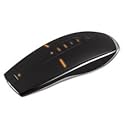
Loop Pointer In-Air Mouse for PCs & Macs connected to TVs & ProjectorsLogitech MX Air Rechargeable Cordless Air MouseKensington SlimBlade Trackball Mouse with Bluetooth Wireless (Graphite) K72281USWavit 3D PC remote for the InternetGyration GYM1100NA Air Mouse GO Plus

There is too much to summarize, so here is a copy of the press release, from Steaming Media:

WebTaps Releases HDTV Web Browser

WebTaps announces the availability of the first HDTV web browser with integrated intelligent virtual keyboard and screen scaling technology


Rockville, Maryland (December 17, 2009) -

WebTaps, a developer of web browsing software for HDTVs and touch screen PCs, today announced the availability of the WebTaps HDTV Web Browser. The browser is designed to be used from across the room in a TV viewing environment to augment or replace the content otherwise available on the HDTV. WebTaps offers the only HDTV web browser that automatically scales web content to the full size of the HDTV screen and includes a truly intelligent virtual keyboard. The patent-pending intelligent virtual keyboard knows when and where to appear on-screen so that text can be easily entered while watching from across the room.

"WebTaps has finally brought the full internet, including access to every website, to the biggest and best screen in the home - the HDTV," said Scott Lincke, CEO of WebTaps. "WebTaps enables people to sit back and comfortably access great sites like Hulu.com, Facebook, YouTube, and Google. They can easily find content and sit back to watch together with their friends and family instead of staring at a laptop screen. WebTaps really transforms how people can use their HDTV by bringing an infinite supply of content, unlimited by their cable company or over-the-air TV signal."


To get started, users of PC-connected HDTVs download the free software installer from www.WebTaps.com. No user signup is required. The user simply selects their country and language and the software is ready to use. A localized content guide is presented, showing great content sites. Alternately, users can enter any web address or search any of the leading search engines.

WebTaps plans to distribute its products through retailers and PC OEMs in 2010. "We are pleased by the reaction to our products," said Scott Lincke. "Web browsing on HDTVs saves people money spent on premium services and they tell us that it gives them even more functionality than their DVR since they don't have to think ahead about what they want to record. Suddenly anything available on the web can be watched on their big screen TV."


WebTaps HDTV Web Browser product evaluation kits are available for qualified press personnel. In addition, WebTaps will have representatives available to answer further questions at the Consumer Electronics Show in January, 2010. Please contact WebTaps at pr@WebTaps.com for more information.

###

About WebTaps Inc.


WebTaps Inc. develops technology and products that enable web browsing on HDTVs and touch-screen PCs. The company offers its solutions for sale directly to consumers and for licensing to PC OEMs and service providers. WebTaps standard version is available as a free download. Additionally a premium version is available with or without a WebTaps wireless remote control. Further information about WebTaps and the WebTaps HDTV Web Browser can be found at www.WebTaps.com.

The names of actual companies and products mentioned herein may be the trademarks of their respective owners.


WEBTAPS INC.
Editorial Contact:
Scott Lincke
(202) 713-5620
pr@WebTaps.com

Nov 2, 2009

Adobe's Resources: Contextual Solutions, Rich internet applications across devices, and Open Screen.

I thought I'd share a few interesting resources from Adobe.  The company is focused on the future, and I plan to watch what unfolds.  Adobe believes that the next generation of the company's products will move us forward to a world of seamless access to content, across screens of all sizes, everywhere we go.

I'm hoping that this will not lead to an environment where we have difficulty escaping "skip intro" ads everywhere we turn.  Hopefully it won't be too bad!

I found a few gems of wisdom in the Adobe white paper,   Designing Contextual Solutions and Applications.  The paper provides a conceptual framework that I think would be helpful to web designers/developers who are interested in off-the-desktop application development.


Here is an excerpt from the introduction of the white paper:
"With its platforms and products that are inherently multichannel and multidevice, Adobe envisions a new class of “contextual solutions” taking hold in the marketplace. These solutions are broader in scope than a device, a campaign, or a single service; rather, they encapsulate the various contexts in which the end user exists, interacts, thinks, consumes, and purchases. And when content owners understand the different types of users and how they differ in their contexts, they are in a much better position to design experiences that are compelling and sticky. At the heart of every contextual solution is at least one or more contextual applications—an emerging type of application that spans multiple devices and uses system, user, and network contexts to provide an optimized user experience and deliver improved business results.

This white paper provides an overview of the types of contexts that compose a contextual solution and application. With examples given along the way, it culminates with a framework for considering all appropriate contexts while designing and developing a new contextual solution or an application that is part of an existing solution."


Another Adobe white paper is quite useful - Rich Internet Applications across devices: The emergence of contextual applications.  It provides examples of RIA's across devices, such as Amazon Video On Demand,  Demandbase, Atlantic Records: Fanbase, Finetune, and Times Reader 2.0.

Additional Adobe Resources
Contextual Applications
Open Screen Project:  "Singular experience, multiple devices"
Adobe Flash Platform

Oct 3, 2009

Interactive TV Game Controllers - A variety of permutations for the present and the future (iPhone, iPod Touch, Wii mote, XBox 360 Controller, Gesture...)

Building on my previous post, The Convergence of TV, the Internet, and Interactivity: Updated and Revised, I thought I'd focus on the different ways people can interact with converging content through interactive TV, internet-connected game consoles, and so forth. Is it time someone came up with a user-friendly UNIVERSAL CONTROLLER that could handle cross platform, cross media interaction?

http://www.theiphoneblog.com/images/stories/2009/01/iphone_apple_tv_game_controller-337x400.jpg

How About the iPhone as Controller for Apple TV Gaming Console?
(Read the article's comments section to see what people think about this concept.)


Of course, if you have a Wii, you know about the Internet Channel:

http://www.nintendo.com/images/wii/menu/internetchannel/big_tv.png
Wii + Internet=More

Video of a real 12-year-old kid navigating through the Wii Internet and Wii News/Earth. He provides a great "think aloud" analysis of his interaction.


"They should make a video game that is geography based on something like this..."

Xbox permutations:

This:

 http://www.krunker.com/wp-content/uploads/2006/08/WindowsLiveWriter/MicrosoftXbox360WirelessControllerforWin_AE26/new%20xbox%20wireless%20controller%5B2%5D.jpg

Or maybe even this, if you blog, chat, or  tweet:

http://www.blogcdn.com/www.engadget.com/media/2007/04/qwerty-xbox-360.jpg
The following social/interactive applications can be controlled by your Xbox Controller:(The photos were taken from Gizmodo "Microsoft E3 Keynote Archive" and Zatz Not Funny!: Xbox 360: Welcome to the Social?)

http://www.zatznotfunny.com/wordpress/wp-content/uploads/2009/05/sky-xbox-420x315.jpg
Sky Player on Xbox 360 to Launch Mid-October

http://www.zatznotfunny.com/wordpress/wp-content/uploads/2009/06/xbox-social.jpg


With the introduction of gesture-based interaction, such as Microsoft's Project Natal, in the future, no controller will be required to interact with your screen, no matter the content.

http://technabob.com/blog/wp-content/uploads/2009/06/project_natal_no_controller.jpg

Project Natal for Xbox 360 could put Microsoft ahead of Wii with controller-free gaming


YOU ARE THE CONTROLLER
XBox Project Natal Website

Motion Sensing Confirmed for 2010 (Sony PlayStation 3)


RELATED
Interactive demonstration of how BBC's Red Button works for interactive TV content.  You can press the red button on the mockup, located on the lower right-hand section of the screen.
BBC Red Button Demo

BBC Red Button launches new CBeebies interactive service
Digital Television Group 9/28/09

Social Television and User Interaction
(Scholarly articles on this topic from the ACM Portal) 
Stefan Agamanolis (researcher in this area)


Interactive TV Research from UITV.INFO

Sep 23, 2009

Shift Happens Revisited: Do You Know 4.0 - Convergence and Social Media, by Xplane and the Economist


"This is another official update to the original "Shift Happens" video. This completely new Fall 2009 version includes facts and stats focusing on the changing media landscape, including convergence and technology, and was developed in partnership with The Economist. For more information, or to join the conversation, please visit http://mediaconvergence.economist.com and http://shifthappens.wikispaces.com."

More later.

Mar 22, 2009

Boxee and Digital Convergence

This post is an update to a previous post, Digital Convergence & Interactive Television

Have you heard about Boxee?  I first learned of it today when I came across an interesting post on the Boxee Blog of a debate with Mark Cuban, author of the post, Why Do Internet People Think Content People Are Stupid? on Blog Maverick.

This debate led me to the following related posts:
Boxee CEO: Consumers Will Get a la Carte Online
(Ryan Lawler, Contentinople: Networking the Digital Media Industry)
Bewkes Defends TV Everywhere (Post by Georg Szalai on the Hollywood Report of how Time Warner would provide subscribers to view cable TV network content online.)

What is boxee? Sort of a social-network-internet-cable-TV-Wii application....
"On a laptop or connected to an HDTV, boxee gives you a true entertainment experience to enjoy your movies, TV shows, music and photos, as well as streaming content from websites like Netflix, CBS, Comedy Central, Last.fm, and flickr."

quick intro to boxee from boxee on Vimeo.

From the boxee blog:
"boxee is the developer of the first “social” media center. boxee plays media from your computer and other devices in your home network, as well as connect you to various Internet sources that allow you to stream or download movies, tv shows, music and photos. boxee is based on the xbmc open-source project. we have been working with team-xbmc since early 2007.
We are in the process of alpha testing boxee, so this is why you need to get an invite to participate.. sorry. the alpha is for Mac OS X 10.4 (and above), Ubuntu and Apple TV (a Windows version will come out towards the end of the year"

Sep 11, 2008

Special Issue on Multimedia, Media Convergence, and Digital Storytelling (RCETJ)

Mark van 't Hooft, the chair of ISTE's SIGHC, recently shared information and links to an interesting special issue of on-line publications about multimedia related topics:

An Introduction to the RCETJ Special Issue on Multimedia, Media Convergence, and Digital Storytelling (Journal of the Research Center for Educational Technology, Fall 2008 Special Issue)

Video-Based Additional Instruction (Marc Franciszkowicz)

Design and Assessment of an On-line Pre-lab Model in General Chemistry
: A Case Study (Juan Antonion Llorens-Molina)

The iPod Project: A Mobile Mini-Lab
(Nikhil Sathe and Jorg Waltje)

Media Convergence in a College Newsroom: A Longitudinal Study of Identification and Commitment to a Collaborative Web Site (Fred Endres)

Jul 29, 2006

Virtual Reality & Convergence with Game Technology

Virtual Reality is sometimes used to treat a variety of disorders. In the future, VR applications may be affordable for wider use in education. VR and computer/video game technologies are converging- expect amazing applications within the next 3-5 years for health, education, training, and more.

Dr. Skip Rizzo, a psychologist from USC 's Institute for Creative Technologies, specializes in VR. Dr. Rizzo presented "Gaming for Health: Virtual Reality Game-Based Applications for Mental Disorders and Rehabilitation." at the University of Southern California Games Summit in October 2005. A zipped version of his PowerPoint presentation is available.
According to information from the Integrated Media Systems Center website,
"Prof. Rizzo is continuing his collaboration with IMSC investigators and described projects that integrate game technology in the areas of attention process assessment of children with attention deficit hyperactivity disorder, pain distraction for children undergoing painful medical procedures and chemotherapy,exposure therapy for returning Iraq War veterans with post-traumatic stress disorder, and motor rehabilitation for persons with central nervous system dysfunction (i.e., stroke, brain injury). According to Rizzo, "the integration of game technology and experiences with virtual reality based approaches for clinical assessment, treatment and rehabilitation offers powerful options that could revolutionize standard practices in these fields."
Dr. Rizzo has been involved in The Virtual Classroom, A VR environment that assesses ADHD in children. For more information regarding the Virtual Classroom, see the full article(pdf).

There is an interesting article for students about the Virtual Classroom,
"A Classroom of the Mind", by Emily Sohn, along with related activities, in Science News for Kids.

VR TREATMENT OF ANXIETY DISORDERS
Virtually Better (from website):

"Founded in 1996, Virtually Better is known world wide as an innovator in the creation of virtual reality environments for use in the treatment of anxiety disorders such as fear of flying, fear of heights, fear of public speaking as well as post-traumatic stress disorder (PTSD)... Our on-site clinic is staffed by a team of licensed clinical psychologists devoted to using cognitive-behavioral techniques (including virtual reality exposure therapy) for the treatment of various disorders in both adults and children... Virtually Better grew from the collaborative research of Barbara O. Rothbaum, Ph.D., Associate Professor in Psychiatry, and Director of Trauma and Anxiety Recovery Program at the Emory University School of Medicine in Atlanta, Georgia and Larry F. Hodges, Ph.D., formerly with the Georgia Institute of Technology, and now Professor and Chair, Department of Computer Science, University of North Carolina at Charlotte."

Related Information:
"The Virtual Reality Lab (VRlab), at the Swiss Federal Institute of Technology has a collection of VR demonstrations, including the use of VR for social phobia.

A large selection of fairly recent, downloadable powerpoint presentations about the use of VR can be found on the Interactive Media Institute website.