Showing posts with label social media. Show all posts

May 17, 2013

Astronaut Chris Hadfield's Awesome Music Video from Space - in case you missed it!

Amazing Music from Space

I finally got around to watching Canadian astronaut Chris Hadfield's wonderful remake of David Bowie's Space Oddity, created on the International Space Station.  Hadfield makes the music his his own, changing a few words, to share his experience with the world.  

I was impressed with the quality of this video, from the editing to the sound mix.  


Chris Hadfield spent the last several months in space, and during this time, he connected with thousands of people, young and old, around the globe.  Although he is now known for his space music video,  many school children learned before his video went viral. His tweets, pictures, and video clips from space were followed by students in classrooms around the world.  
(See "Related" section at the bottom of this post for links to related information about Chris Hadfield.)


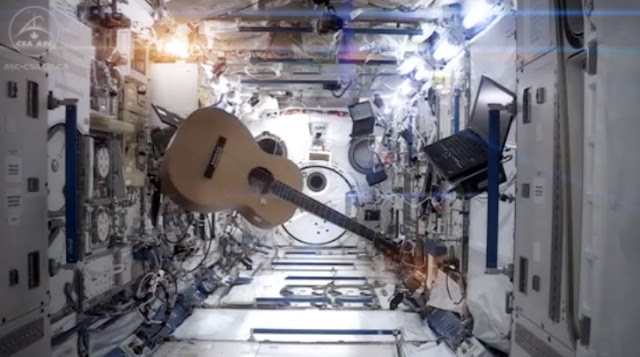
I really liked the images from the video. Below are screen shots of some of my favorite scenes:
:49 Chris Hadfield looking out towards Earth and space


1:12 Guitar floating in space station


2:31 Chris Hadfield playing guitar


2:41 View of Earth and clouds from space


2:47 View of Earth at night


4:10 View of earth and darkness of space from window


RELATED
John Bowman, CBCNews Your Community Blog, 5/14/13
Kyle Wagner, Gizmodo, 5/13/13

Mar 11, 2012

Jennifer Pahlka's TED talk: "Coding a Better Government" - how Code for America fellows and others are harnessing social media, mobile apps, and the web.

FYI: Jennifer Pahlka will be a keynote speaker on Tuesday, March 13 at the SXSW (South by Southwest) conference in Austin, Texas. SXSW events and interactive keynotes will be streaming live at http://sxsw.com/interactive/live 

In the above video, Jennifer Pahlka, the founder of Code for America, discusses how "coding" citizens- app developers, web developers, designers, and others are helping government work more efficiently and effectively, drawing on the strength of the internet, mobile web, and social media.  http://www.ted.com/talks/view/lang///id/1381


Participatory citizenship through coding!


RELATED
Code for America Fellowship Program
The Code for America Fellows work in teams for 11 months, during which they receive mentoring, education about municipal government, and the opportunity to develop a web application to help cities - and citizens- solve problems.  The 2012 Fellows are based in San Francisco, and are provided a $35,000 stipend, travel expenses, and healthcare. Although based in San Francisco, the Fellows are assigned to a host city (Boston, Washington D.C., Philadelphia, or Seatle), and spend some of their time on-site.
Code for America Blog

South by Southwest - SXSW -Austin, Texas
"The South by Southwest Conference & Festivals offer the unique convergence of original music, independent films, and emerging technologies. Fostering creative and professional growth alike, SXSW is the premier destination for discovery" -SXSW 


SXSW YouTube Channel

Jan 16, 2012

Quick link: How to use game dynamics in the classroom, with good links, via Edudemic (Jeff Dunn)

How To Use Game Dynamics In The Classroom 


Although the article refers to the work of Liz Gross and her colleague(s) focusing on the use of game dynamics in a large university lecture class, there are links to a variety of interesting resources and posts that address games in education across many settings. This work is part of a research proposal for funding from the Digital Media + Learning competition.


RELATED 
Digital Media and Learning Conference 
March 1-13, 2012
UC Humanities Research Institute University of California, Irvine 
About the Conference (info from the DML website)
"The Digital Media and Learning Conference is an annual event supported by the MacArthur Foundation and organized by the Digital Media and Learning Research Hub located at the UC Humanities Research Institute, University of California, Irvine. The conference is meant to be an inclusive, international and annual gathering of scholars and practitioners in the field, focused on fostering interdisciplinary and participatory dialog and linking theory, empirical study, policy, and practice. The third annual conference – DML2012 – is organized around the theme “Beyond Educational Technology: Learning Innovations in a Connected World” and will be held between March 1-3, 2012 in San Francisco, California."
Keynote: John Seely Brown 
Plenary Panelists: Eleizabeth Corcoran, Renaldo Lemos, Leslie Redd, and Constance M. Yowell 
Conference Committee: 
Diana Rhoten, Conference Chair
Tracy Fullerton:   Re-imagining Media for Learning Chair
Antero Garcia:   Innovations for Public Education Chair
Mitch Resnick:   Making, Tinkering and Remixing Chair
Mark Surman:    Democratizing Learning Innovation Chair
Jess Klein:   Democratizing Learning Innovation Co-Chair 


Thanks to Yasmine Kasbi for sharing the post on Google+!

Nov 24, 2011

Mind/Shift Blog Post: Read, Hear, or Create a Story: Apps for Traveling with Kids - and great related links!

Today is Thanksgiving, and one of the things I'm thankful for is the opportunity to share interesting ideas and links with readers of this blog! 


The following post was written by Tina Barseghian, who is an editor/blogger at KQED/NPR for the Mind/Shift blog. Mind/Shift  focuses on ideas and technology that will impact the future of how we learn.  
Read, Hear, or Create a Story: Apps for Traveling with Kids Tina Barseghian, Mind/Shift, 11/23/11

Link to other Mind/Shift post collections:
Children and Social Media
Tech Tools
Mobile Learning
Digital Divide
School Day of the Future


RELATED 
Boredom Busters: 50 Fantastic Play-and-Learn Apps, Sites, and Toys
Tina Barseghian, Mind/Shift, 6/17/11
Libraries and Museums Become Hands-On Learning Labs 
Audrey Watters, Mind/Shift. 11/23/11
"A new competition sponsored by the Institute for Museum and Library Services (IMLS) and the John D. and Catherine T. MacArthur Foundation has just announced 12 winning libraries and museums that will receive $1.2 million in grant money to help push the boundaries of what these institutions look like, specifically helping to create facilities that are  better "learning labs" for teens"
Lauren Britton Smedley (Transliteracy Development Director a the Fayetteville Free Library)
IDEO's Design for Learning (Sandy Speicher, Duane Bray, Rachel Switzky)
K12 Laboratory at D. School (Stanford)
Books Should Be Free
Storynory, Storynory iTunes Library:  Podcasted stories for children, offers a free audio story every week, has some online multimedia activities.


May 13, 2011

Exploring Social Media Literacies in Teaching and Learning: Howard Rheingold's Keynote at CHI 2011

Howard Rheingold
"Independent thinker, online instigator, novice educator, expert learner, offline gardener." 
(Howard Rheingold's Twitter profile)
Credit- Joi
Howard Rheingold was the opening keynote speaker at the ACM-CHI 2011 conference on May 9th, in Vancouver, Canada.  In his delightful talk, Rheingold discussed his exploration of social media and social media literacies in teaching and learning, drawing upon his experience teaching university courses.  According to Rheingold, these literacies include mindful infotention; participation; collaboration, and critical consumption, or in his words, crap detection. 


In traditional classrooms, students are given a number of reading assignments, and then called upon to respond to the instructor's questions, demonstrating that they "did the reading".  From Rheingold's perspective, this is off-track, as cold-calling students isn't the way to foster "thinking, reflection, inquiry, and the ability to contribute to a broader conversation."


Rheingold suggests that it is a myth that "tech-savvy" digital natives know how to use technology for learning and connecting with others effectively, drawing from his recent experience teaching university students.  Rheingold believes that the goal of learning is not to get the right answer, but to learn strategies such as inquiry, exploration, and collaboration.  Learning is not limited to the classroom walls, but takes place (within a network of other co-learners, linked to one another, and also linked to the wealth of resources that are available on-line.  


In this way, a "culture of conversation" is built that extends well beyond the classroom, and takes place after the official class period has ended. Technology is not the solution-  it is a tool that when harnessed thoughtfully, can support co-learning activities in a variety and combination of ways.  This process, Rheingold stresses, can facilitate engaged learning, and amplify intelligence.


If you are interested in exploring the wisdom of Rheingold, take some time to soak in the videos below, as well as the links to resources provided at the end of this post.


21st century media literacies from JD Lasica on Vimeo.


Howard Rheingold at Reboot Britain


More About Howard Rheingold
As early as the mid-1990's, Howard was clear that the future of technology would be visual and multimedia, and that technology would improve access to a wealth of information as well as provide opportunities for increasing connections between people. Rheingold is known for his 2002 book, SmartMobs: The Next Social Revolution- Transforming Cultures and Communities in the Age of Instant Access. He has taught courses such as Digital Journalism at Stanford University and Virtual Community/Social Media at the University of California, Berkeley, and his approach to teaching breaks the traditional mold, given the comments from his former students.  

Since most people don't have the means to attend Stanford or Berkeley, Rheingold recently established Rheingold U, an on-line learning community offering courses that run about 5 weeks, through live sessions and the use of forums, blogs, wikis, mindmaps, and social bookmarks. 

To explore the Howard Rheingold's Story,  his Wikipedia page, his website, and Electric Minds Archives, a blast from the mid-1990's past. Also take a look at the following resources and links:

Virtual Community/Social Media Course Prezi
Virtual Community/Social Media Course Concept Map
Interactive Mindful Infotention Concept Map, which links to additional resources
Wiki:  Interactive presentation media - a good "how-to" resource
Howard Rheingold's gaming2learn Bookmarks


RELATED
Developing the Digital Learner (Intel)
Standards for Global Learning in the Digital Age - ISTE (International Society for Technology in Education)
A New Culture of Learning: Cultivating the Imagination for a World of Constant Change (Book authored by Douglas Thomas and John Seely Brown)


PREVIOUS CHI-2011 RELATED POSTS
Allison Druin's Workshop Keynote: "Mining the Imagination from Time Travel to Anti-Gravity"  CHI 2011, Vancouver,Canada (Child Computer Interaction: UI technologies and their impact on educational pedagogy)
Update from CHI 2011 - much more to come!
Press Pass for CHI 2011!  Today's Highlights from the ACM CHI Conference on Human Factors in Computing Systems


FYI:
If you are unfamiliar with the acronyms, ACM stands for the Association for Computing Machinery, and is known as the world's largest educational and scientific computing society, with over 108,000 members. Within the ACM are a number of special interest groups, known as SIGs.  SIG-CHI is an interdisciplinary group of practitioners, industry researchers,  students, and academicians who represent fields of design, engineering, management, and user experience. All members of SIG-CHI are interested in topics related to Computer-Human Interaction in some way.   Communities featured at the CHI-2011 conference are Child-Computer Interaction; Games and Entertainment; Health; and Sustainability.  

Feb 22, 2011

How Social Can News Get? SoCon11 Presentation by Lee Rainie, Pew Internet Project

If you'd like to learn more about social media,  take a look at the following presentation from the recent SoCon11 conference, "How social can news get?", by Lee Rainie,  Director of the Pew Internet Project:


"Lee Rainie, Director of the Pew Internet Project, discusses the Project’s latest findings at the SoCon11 conference. He goes through trends in social media use in the last five years of the Project’s data. He explores how the turn to pervasive, participatory, personal, and portable news changes the way news consumers and producers behave and think about the role of news in their lives." - Pew Internet and American Life Project


Quite a few topics were covered at the conference, which can be found on the SoCon11 Agenda site.

Jan 17, 2011

Social Sound Waving: Sound Cloud

One of my Facebook friends recently shared a link to the SoundCloud website, a site that is new to me.  I was pleasantly surprised to learn about it!


"SoundCloud is a platform that puts your sound at the heart of communities, websites and even apps. Watch conversations, connections and social experiences happen, with your sound as the spark." -SoundCloud

Here is the screenshot and the link:

Jurassic Park Theme (1000% Slower)

Yet another rabbit hole for me to follow in the future!

Jun 28, 2010

Slow Media Manifesto (a link from Nat Torkington of O'Reilly Radar)

Slow Media Manifesto

"In the second decade, people will not search for new technologies allowing for even easier, faster and low-priced content production. Rather, appropriate reactions to this media revolution are to be developed and integrated politically, culturally and socially. The concept “Slow”, as in “Slow Food” and not as in “Slow Down”, is a key for this. Like “Slow Food”, Slow Media are not about fast consumption but about choosing the ingredients mindfully and preparing them in a concentrated manner. Slow Media are welcoming and hospitable. They like to share." -Slow Media Manifesto


I especially liked #5 of the Slow Media Manifesto:

"5. Slow Media advance Prosumers, i.e. people who actively define what and how they want to consume and produce. In Slow Media, the active Prosumer, inspired by his media usage to develop new ideas and take action, replaces the passive consumer. This may be shown by marginals in a book or animated discussion about a record with friends. Slow Media inspire, continuously affect the users’ thoughts and actions and are still perceptible years later. "

Slow Media Blog

RELATED
Slow Media
Beyond the Beyond: The Slow Media Manifesto
Bruce Sterling, Wired 6/28/10
Apres les slow food, les slow media?
Nouvo, 6/25/10
La manifeste des slow media (tradution: fr)

Jan 18, 2010

Facebook Settings and Privacy: Jeff Elder's post. "Walk through Facebook Privacy Settings". A must-read & do!

I use Facebook at least once a day to keep up with relatives, friends, colleagues, colleagues of colleagues, and interest groups.   In many situations, I find that Facebook is much more efficient than relying on e-mail, Twitter, and RSS feeds.  Sad to say, the frequent use of Facebook without regularly inspecting and modifying privacy settings (and other settings) will result in exposing parts of your life to the world, seeming without your informed consent.

One person I rely on for good advice regarding privacy issues and social networking sites is Jeff Elder.  His recent blog post,  "Walk through Facebook privacy settings"  is something I recommend members of Facebook read read and follow.  It might take up to 30 minutes of your time, but the time you spend will be important.

Through blogging, so much of "me" is out there, and this is the case for many others.  Even so, it is important for me to have control over what Jeff Elder calls "the giant peephole".  What people can see through the peephole of Facebook changes, often in the periphery of our awareness, and as a result, we might be sharing more information to others, including marketers, than we would like.

(Jeff Elder is a longtime Charlotte Observer columnist who studied social media on a Knight fellowship at Stanford University, blogs about social media and networking for folks in the Charlotte, NC region.)

Dec 3, 2009

People-Centric Public Media, Public Media 2.0, & New Media: Considerations for Interactive, Collaborative Multimedia Content

I followed a link from an article written by Andy Oram, of the O'Reilly Radar and found some interesting information related to public media. The graphics and quotes below are from a publication, Public Media 2.0: Dynamic, Engaged Publics (pdf), written by people from the Center for Social Media at the School of Communication, American University.

Public Media 2.0: Dynamic, Engaged Publics    Full Report pdf
Center for Social Media,  School of Communication, American University


"Multi-platform, participatory, and digital, public media 2.0 will be an essential feature
of truly democratic public life from here on in. And it’ll be media both for and by the
public. The grassroots mobilization around the 2008 electoral campaign is just one
signal of how digital tools for making and sharing media open up new opportunities
for civic engagement.

But public media 2.0 won’t happen by accident, or for free. The same bottom-line logic
that runs media today will run tomorrow’s media as well. If we’re going to have media
for vibrant democratic culture, we have to plan for it, try it out, show people that it
matters, and build new constituencies to invest in it.

The first and crucial step is to embrace the participatory—the feature that has also been most disruptive of current media models. We also need standards and metrics to define truly meaningful participation in media for public life. And we need policies, initiatives, and sustainable financial models that can turn today’s assets and experiments into tomorrow’s tried-and-true public media.


Public media stakeholders, especially such trusted institutions as public broadcasting, need to take leadership in creating a true public investment in public media 2.0."

Action Agendas
"Public media institutions and makers need to develop a participatory national network and platform; to cross cultural, social, economic, ethnic, and political divides; to collaborate; and to learn from others’ examples, including their mistakes.

• Policymakers need to create structures and funding to support national coordination of public media networks and funding for production, curation, and archiving; to use universal design principles in communications infrastructure policy and universal service values in constructing and supporting infrastructure; to support lifelong education that helps everyone be media makers; and to build grassroots participation into public policy processes using social media tools.

• Funders can invest in media projects that build democratic publics; in norms setting, standardization of reliability tools, and impact metrics; and in experiments in media making, media organizations, and media tools, especially among disenfranchised communities."
Some key points from the article:
Five fundamental ways that people's media habits are changing - The Five Media Habits:
Choice
Conversation
Curation
Creation
Collaboration
Trends with possibilities for public media 2.0:
Ubiquitous video (choice, creation, collaboration)
Powerful databases (curation, creation)
Social networks as public forums (conversation, collaboration)
Locative media (choice, creation)
Distributed distribution (choice, curation)
Hackable platforms (creation, collaboration, curation)
Accessible metrics (creation, curation)
Cloud content (choice, creation)
Pervasive gaming (choice, collaboration)

RELATED

Eight Public Media 2.0 Projects That Are Doing it Right
Jessica Clark, Mediashift, 10/6/09
("MediaShift tracks how new media -- from weblogs to podcasts to citizen journalism -- are changing society and culture.")
The intersection of media literacy and public media 2.0
Katie Donnelly, Public Media 2.0, 10/16/09
VoiceThread "VoiceThread is a powerful new way to talk about and share your images, documents, and videos"

I'll update this post with some of my thoughts/reflections about Public Media 2.0 and interactive multimedia content development.